Skip to content Skip to navigation
University of Warwick
  • Study
  • |
  • Research
  • |
  • Business
  • |
  • Alumni
  • |
  • News
  • Text only
  • |
  • Sign in
  • Search Classics & Ancient History
  • Search University of Warwick
  • Search for people at Warwick
  • Search Warwick Blogs
  • Search past exam papers
  • Search video
  • More…

    Classics and Ancient History

    • Admissions
    • Undergraduates
    • Postgraduates
    • Staff
    • Research
    • Careers
    • Dept. projects »
    • Historia Numorum
    • Warwick Epidemics
    University of Warwick

    Departmental Research Projects

    This page outlines current departmental projects and focusses which have attracted targeted internal and external investment. For individual staff interests, please go to the staff pages and the research interests page.

    Numismatics and epigraphy are key subdisciplines of Classics, and we are currently supporting the work of several specialists in these areas (Kevin Butcher, Suzanne Frey-Kupper, Stanley Ireland, Marguerite Spoerri; Alison Cooley, Fabienne Marchand, Abigail Graham). In addition, Prof. John Bodel (Brown University) will be here as a Visiting Fellow of Warwick's Institute of Advanced Studies for two weeks at the end of May 2012. Our work on the reception of Classical antiquity in the medieval and Renaissance periods also involves seven members of the department. It has two particular focusses. Several of us (Bink Hallum, Simon Swain, Uwe Vagelpohl, Elvira Wakelnig) work on the development of Greek thought and science in medieval Islam. Humanism in Italy and in New Spain is the particular expertise of Andrew Laird and Maude Vanhaelen. Several members of staff have interests in early modern and modern responses to the Classics (Alison Cooley, Andrew Laird, Zahra Newby), and this strand of our activity is the main focus of Dan Orrells. We flag up below the major international retrospective hosted by Dan Orrells in November 2008 at Warwick to mark 20 years of Black Athena.

    Please contact individual members of staff if you would like to know more about our projects: search for email addresses.


    Numismatics / Epigraphy / Graeco-Arabic Research / Renaissance and Humanism / Reception Studies /


    Numismatics

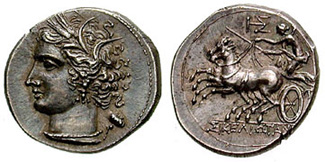
    For general information about numismatics at Warwick, click here. Specific research projects include:

    • Publication of coins of Asia Minor
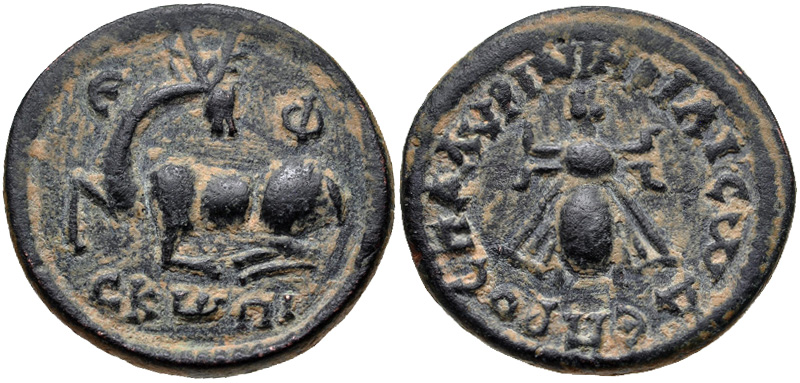
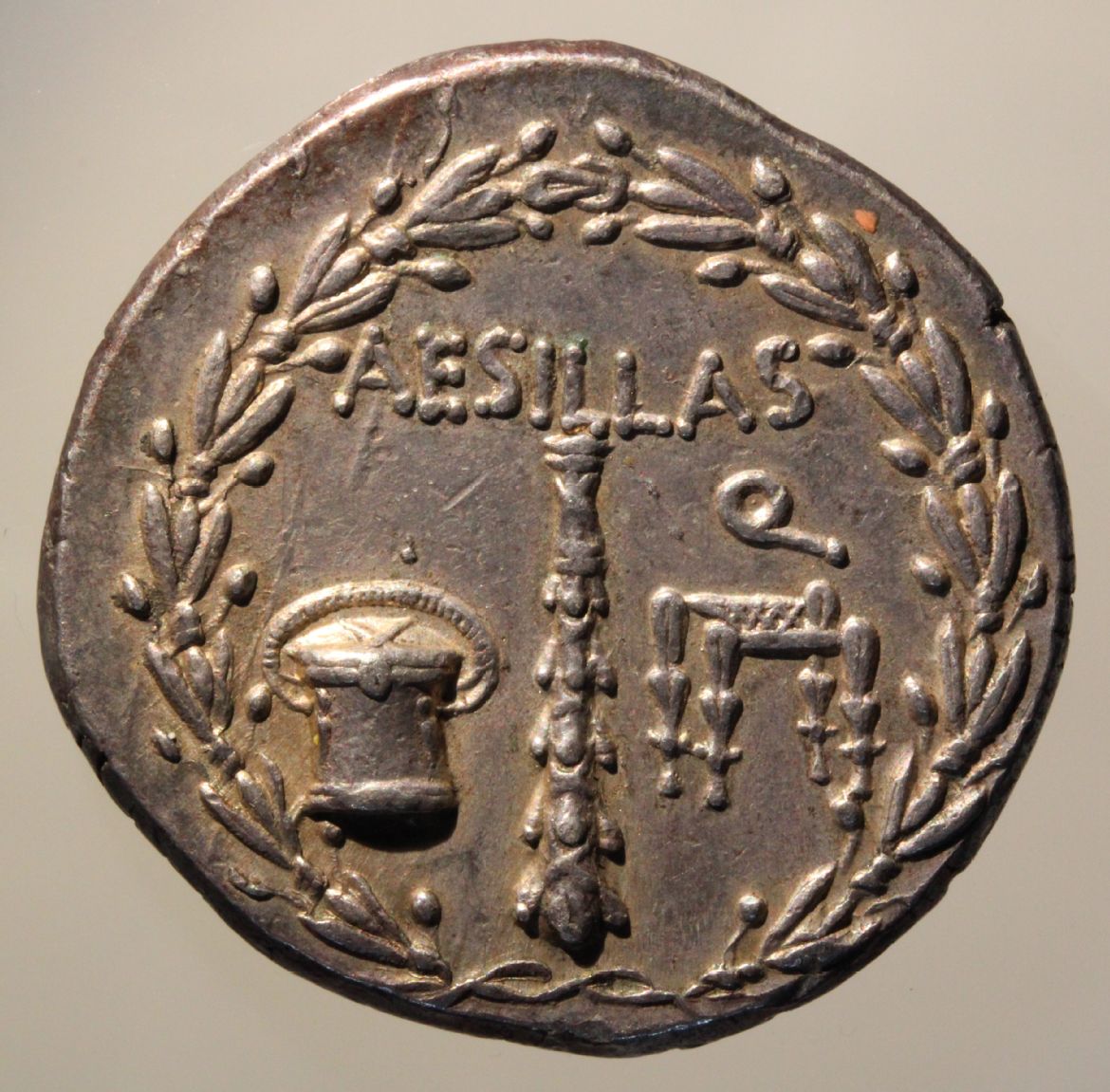
      Museums form the largest repository of ancient coins in existence, but all too often their holdings are unpublished, making access to the information they have to offer less than easy for the numismatist. The project being undertaken by Stanley Ireland of Warwick and Richard Ashton of London is designed to put into print the coins minted by the Greek cities of Asia Minor, currently held in the Ashmolean Museum, Oxford. This is being carried out using an innovative database which allows the easy entry of data, its organisation, and eventually its accessing either in printed form or electronically over the web.

      So far, they have published Sylloge Nummorum Graecorum, Volume V, Ashmolean Museum Oxford, Part IX, Bosporus-Aeolis (Oxford 2007), and are currently preparing for the same series Volume V, Ashmolean Museum Oxford, Part XI, Caria-Commagene. 
    • The metallurgy of Roman silver coinage
      This a long term collaborative project between Kevin Butcher (Warwick) and Matthew Ponting (Liverpool) investigating the metallurgy and fineness of Roman silver coinage using ICP and lead isotope analysis.

      The first major stage of the project covers the period from AD 64 to AD 193 and has received AHRC funding for three years, 2006-2009. Further funding will be sought to carry the project from the late second to fifth centuries AD. In the past the project has been funded by the Leverhulme Trust (twice), the British Academy (twice), the Society of Antiquaries, the Society for the Promotion of Roman Studies, the UK Numismatic Trust and the American University of Beirut Research Board (three times). It draws on material from the collections of several leading museums, such as the British Museum, London, and the Ashmolean Museum, Oxford, the Muenzkabinett Winterthur in Switzerland, Yale University Art Gallery, and several regional collections in the United Kingdom. These analyses will provide the framework for a complete reinterpretation of monetary policies in the Roman world.

      A number of articles on the subject have already appeared, several more are in preparation and the final results and commentary will be published as a series of monographs.
    • Griechische Muenzen in Winterthur, vol. III
      Prof. Kevin Butcher, Dr. Marguerite Spoerri-Butcher (Warwick) and Dr. Haim Gitler (Israel Museum, Jerusalem) are collaborating on a project financed by the Swiss canton of Winterthur to produce the third and final volume of the important collection of Greek coins in the Muenzkabinett Winterthur, Switzerland, which comprises issues of Eastern Asia Minor, the ancient Levant, Eastern parts of the Greek world, Egypt and Northern Africa (Project Co-ordinator: Benedikt Zaech, Curator, Muenzkabinett Winterthur).

    • Coin finds from Eretria
      Dr. Marguerite Spoerri Butcher is studying the Roman, Byzantine, medieval and modern coin finds from Eretria, Greece. The purpose of this project is to publish the finds of the Swiss excavations in Eretria, but also to have a broader look at the coin circulation of a small Greek polis during Roman times. This project is funded by the Swiss School of Archaeology in Greece.

    • Re-examination of coin hoard IGCH 2307
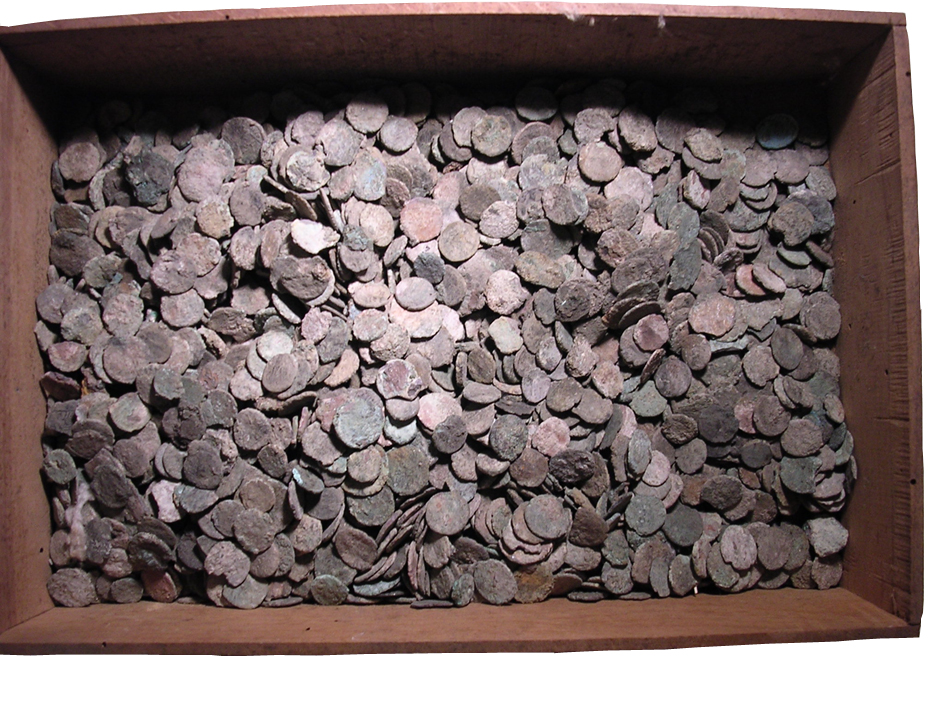
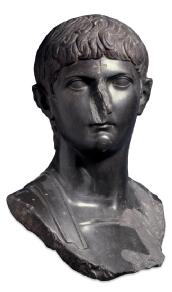
      Dr. Marguerite Spoerri Butcher is undertaking a re-examination of the coin hoard IGCH (M. Thompson - O. Mørkholm – C.M. Kraay, An Inventory of Greek Coin Hoards, New York, 1973) 2307. This hoard was found in Morocco in 1907 and consisted of a large number of denarii of the Mauretanian king Juba II (25 BC – 24 AD). The purpose of this project is to undertake a die study of the coins that can be securely attributed to this hoard. This is the first detailed study of Mauretanian coins since the catalogue of J. Mazard (Corpus nummorum numidiae mauretaniaeque, Paris, 1955) and is intended to resolve issues connected with the organisation of the coinage, its chronology, etc. As parts of the hoard are currently in several different museums, this project involves major coin collections from around the world: British Museum in London (90 ex.), Bibliothèque Nationale de France in Paris (82 ex.), Münzkabinett in Winterthur (72 ex.), American Numismatic Society in New York (24 ex.), Staatliche Münzsammlung in Berlin (26 ex.) and Musée des Antiquités in Algiers (ca. 100 ex.).

    • Coin finds from the canton of Neuchatel, Switzerland
      Dr. Marguerite Spoerri Butcher is participating in the publication of the coin finds form the Swiss canton of Neuchâtel (medieval and modern periods; Roman coin hoard of Dombresson). This project is funded by the Swiss Academy of Humanities.
    • Historia Numorum
      With Keith Rutter and John Morcom, Suzanne Frey-Kupper prepares the volume Sicily and the Adjacent Islands of Historia Numorum which is the standard reference catalogue of Ancient Greek coins. Please click here for further information.


    Epigraphy

    • Postgraduate training

    The department has recently established a Taught MA programme [Ancient Visual and Material Culture], including a stream incorporating the Postgraduate City of Rome course at the BSR [Visual and Material Culture of Ancient Rome], in which students have the opportunity to specialise in epigraphy.

    • Prof John Bodel, IAS Visiting Fellow 2012: Monday 28th May - Sunday 10th June.

    We are looking forward to welcoming Prof John Bodel (Brown) to Warwick as a Visiting Fellow of the Institute of Advanced Studies. During his stay, he will be a key-note speaker at the colloquium, Inventive Inscriptions: epigraphy and the organisation of knowledge; he will also be involved in developing collaborative research programmes entitled 'Rethinking Campania' and ‘Access, education, and scholarship: Latin Inscriptions in Britain’s oldest public museum’; our postgraduate and postdoctoral students will have the opportunity to participate in a training workshop on Roman history and epigraphy. Beyond the Dept of Classics and Ancient History, he will give a paper entitled 'High culture in low places: the popular reception of elite taste at Pompeii' at a research seminar hosted by Dept of History of Art; and finally, he will participate in a workshop hosted by teh School of Comparative American Studies on the theme 'Comparative Approaches to Slavery in Worlds Old and New'.

    • Colloquium: 'Inventive inscriptions' - 29th-30th May 2012

    Alison Cooley, Daniel Orrells, and Zahra Newby are organising a colloquium on the theme 'Inventive inscriptions: Epigraphy and the organisation of knowledge'. The colloquium’s aim is to consider how epigraphy has become a specialist subject, looking at the historical moments and movements which saw the study of inscriptions institutionalised in the nineteenth century. The colloquium has been adopted as the annual colloquium of the British Epigraphy Society. Provisional speakers include Mary Beard (Cambridge), John Bodel (Brown), Alison Cooley (Warwick), Glenys Davies (Edinburgh), Phil Freeman (Liverpool), Mika Kajava (Helsinki), Peter Liddel (Manchester), Thorsten Opper (British Museum), Irene Polinskaya (KCL), Charlotte Roueche (KCL), Ginette Vangenheim (Rouen). For further details, please email alison.cooley@warwick.ac.uk or daniel.orrells@warwick.ac.uk.

    • Current research projects and collaborative work

    Alison Cooley is currently preparing a new edition of the Latin inscriptions in the Ashmolean Museum, in collaboration with the Centre for the Study of Ancient Documents and the Ashmolean Museum. This will include about 150 inscriptions, and will replace the last corpus of the collection, published in 1763 by R. Chandler, Marmora Oxoniensia. Charles Crowther and Peter Thonemann are preparing a companion volume, re-editing the collection of Greek inscriptions from the museum.

    The next quinquennial survey 'Roman Inscriptions, 2006-2010', to be published in JRS 2012, is currently in preparation by Alison Cooley and Benet Salway (UCL).

    Alison Cooley is also joint series editor, with Prof. A.K. Bowman, of Oxford Studies in Ancient Documents (Oxford University Press). The series includes the following volumes: Maria Brosius, ed., Ancient Archives and Archival Traditions (2003); Melissa Terras, Images to Interpretation: an intelligent system to aid historians in reading the Vindolanda Texts (2006); Maureen Carroll, Spirits of the Dead: Roman Funerary Commemoration in Western Europe (2006); Peter Wilson, ed., The Greek Theatre and Festivals: Documentary Studies (2007); M. Cottier, et al, eds, The Customs Law of Asia (2008); Benjamin Kelly, Petitions, Litigation and Social Control in Roman Egypt (2011)

    David Fearn is currently investigating epigraphic and non-epigraphic means of memorializing athletic and other achievements in late archaic and early classical Greece, looking at crossovers between poetry and material culture in a diverse range of contexts. Building on his previous contextual studies of epinician poetry (Bacchylides: Politics, Performance, Poetic Tradition (2007); Aegina: Contexts for Choral Lyric Poetry (ed., 2010)), he is developing a broader view of the similarities and differences, tensions and complementarities, between material modes of commemoration, via inscriptions and sculpture, and non-material, orally delivered, poetic modes. A paper entitled 'Kleos v Stone? Lyric Poetry and Contexts for Memorialization' will appear in the proceedings of the 2009 University of Manchester Literature and Epigraphy Conference, edited by Polly Low and Peter Liddel.

    • Recent publications in epigraphy

    The Res Gestae divi Augusti was rightly dubbed ‘queen of inscriptions’ by Theodore Mommsen. A substantial new commentary on the inscription by Alison Cooley was published by CUP in May 2009. Listen to our podcast, 'The first emperor and the queen of inscriptions: Augustus in his own words'.

    ‘Roman Inscriptions 2001-2005’ (A.E. Cooley, S. Mitchell and B. Salway) appeared in JRS 97 (2007) pp.176-262

    'History and inscriptions, Rome', in The Oxford History of Historical Writing vol 1, eds A. Feldherr and G. Hardy (OUP)

    • Publications in press

    The Cambridge Handbook to Latin Epigraphy by Alison Cooley (CUP) has two main aims. Firstly, to enable readers to appreciate both the potential and the limitations of inscriptions as historical source material, by considering in detail the diversity of epigraphic culture in the Roman world, and how this has been transmitted to the 21st century. Secondly, to provide students with guidance for deciphering inscriptions in their raw state and handling specialist epigraphic publications. This work has been completed thanks to a research leave grant from the AHRC in 2010.


    Graeco-Arabic research

    Graeco-Arabic research at Warwick has two interrelated strands. Medical history is a natural part of such work and is led by Peter E. Pormann. Simon Swain also has medical history interests. This work is the basis of our membership of Warwick’s Centre for the Hisory of Medicine. The second strand is research by Simon Swain and Elvira Wakelnig on the reception of Greek philosophy and ethics.

    • The “Oxford Anthology”
      This
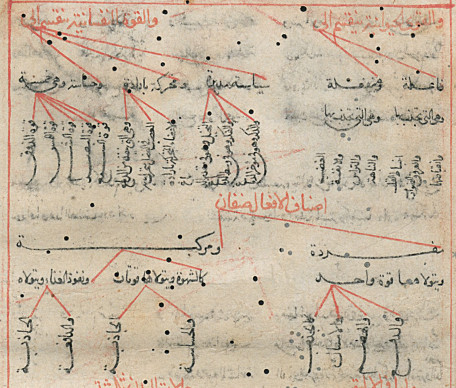
      is a three-year project funded by the Arts and Humanities Research Council (November 2007–October 2010) which will edit, translate, and study a unique collection of mainly Greek philosophical and medical material anthologized in a manuscript kept in the Bodleian Library.

      The need to undertake a proper study of the “Anthology” has been recognized for some time, since the text is closely related to a famous collection of Greek biographical, doxographical, and philosophical-medical material called the “Cabinet of Wisdom”.
      The “Cabinet” comes from the circle of a major intellectual working in 10th c. Baghdad and is one of a number of texts by leading 10th/early 11th c. figures which record the salon culture of this period where the scientific and medical ideas of the day were discussed and disseminated. Study of the “Anthology” will deepen our understanding of the movement sometimes called ‘the Islamic renaissance’, and will advance our knowledge of how the elite used and developed Platonic philosophy and other Greek learning in this crucial period.

      The project is led by Simon Swain. The postdoctoral researcher is Dr Elvira Wakelnig who studied at Vienna, Bamberg, and Erlangen before moving to a research fellowship at the Warburg and assisting Prof. G. Endreß on the Glossarium Graeco-Arabicum at Bochum. Dr Wakelnig has published a number of articles on Islamic philosophy and is the author of a major study on the philosopher al-Āmirī, Feder, Tafel, Mensch. Al-Āmirī’s Kitāb al-Fuṣūl fī l-Ma‘ālim al-ilāhīya und die arabische Proklos-Rezeption im 10. Jh. Text, Übersetzung und Kommentar (Islamic Philosophy, Theology and Science. Texts and Studies, Vol. 67) (Leiden 2006).
    • “Bryson’s Oikonomikos Logos”
      This is a three-year project funded by a Leverhulme Trust Major Research Fellowship awarded to Simon Swain.
      Bryson’s book survives mainly in an Arabic epitome and is a unique example of a genre of ancient literature going back to Xenophon’s famous Oikonomikos. In the later period the genre came to be assoicated with Neopythagorean thinkers. The text will be presented with an English translation and accompanied by a full study of its origins and legacy. Bryson’s importance lies not only in his original development of ancient economic and social theory but also in his thinking on the relationship between husband and wife and his instructions on how to raise children. The work has major implications for the development of Greek ethics in the ‘second sophistic’ period. Its legacy in Islam is no less interesting, since it was used by thinkers like the 10th c. philosopher and historian Miskawayh, by Islam’s most distinguished theologian Ghazali (d. 1111), and even by the ‘Shaykh al-Islam’, Ibn Taymiyya (d. 1328). The project hopes to communicate the importance with which the Greek inheritance is held in medieval and modern Islam.
    • Medicine and Society in Tenth-century Baghdad: Between Greek Theory and Islamic Practice (click for access to Arabic version)
      This major research project is directed by Peter Pormann, and
      is funded by the Wellcome Trust for five years. In the ninth and tenth centuries, Baghdad was not only the political and administrative centre of a vast empire, but also a colossal medical marketplace where practitioners from different backgrounds vied for the attention of potential patients and patrons. It was here that Greek medical texts were translated into Arabic, and that new and sophisticated Islamic hospitals were established. A major—yet entirely overlooked—source for medical theory and practice in tenth-century Baghdad is the Arabic Medical Compendium by al-Kaskarī (fl. 930), a hospital physician who set out in detail his treatment of various illnesses. In each instance, he not only described the disease and summarised previous medical literature on the topic, but also recorded his own case notes, some involving famous patients, as well as treatments developed by his colleagues.

      Peter E Pormann is currently engaged in editing, translating, and commenting upon this unique and fascinating new source, with the aim of making it available to the wider scholarly community. On the basis of this work, and by taking additional, hitherto unexplored sources into consideration while reinterpreting others, he will also address the broader question of elite medical care, public health provision, and popular practices during this formative period.
    • Warwick Epidemics: The Wellcome Trust has recently awarded funding to Peter Pormann and Simon Swain for a major 3-year project to edit, translate and study the Arabic versions of Galen’s commentaries on Bks 1 and 2 of Hippocrates’ Epidemics. Two research assistants will carry out the bulk of the editing and translation, and Swain and Pormann will join them in writing the studies which will form a key part of the publication arising from the Project. The Epidemics are among the most famous books of the Hippocratic corpus because they present the ‘case notes’ of practising physicians. Galen’s commentaries on Epidemics survive complete only in the Arabic translation of Hunayn ibn Ishaq (d. 873). Hunayn was a leading court physician and wrote the first extant textbook of opthalmology. The famous introductory work of the late medieval Italian medical schools, the Isagoge, is a reworking of another of his books under the Latinized form of his name, Johannitius. He is particularly well known in the field of Greco-Arabic for his polished translations of Galen. The initial phase of our project, which is now funded by Wellcome, will edit and translate Galen’s Arabic commentaries on Epidemics 1 to gain experience of Hunayn’s technique by comparing the largely extant Greek text. This will enable us to edit with confidence the commentaries on Bk 2 where the Greek is virtually all lost. At present Hunayn’s text is partially available in a German translation by Franz Pfaff. Regrettably this is not altogether reliable, and moreover Pfaff did not use the best MS. We hope in future to be able to secure funds to edit further tranches of the Arabic Galen of the Epidemics commentaries. The project will be of interest to historians of ancient and medieval medicine, scholars and the general public in Western countries and in the Middle East who pay attention to the common roots of medical and scientific learning in the Christian and Islamic worlds, and to all those who are interested in science and medicine as vehicles for the movement of ideas between cultures and languages.


    Renaissance Classical Humanism and Early Modern Latin

    The Department of Classics has developed research specialisms in two principal areas of the Early Modern Latin tradition: Classical humanism and intellectual history of the Italian Renaissance and the classical traditions and Latin cultures of Iberia and colonial Spanish America (Maude Vanhaelen, Andrew Laird). Since 2000, there have been successful collaborations with other institutions in the UK and overseas, as well as the Centre for the Study of the Renaissance in Warwick which has well established links with the Warburg Institute in London and the Newberry Library in Chicago. These have included a lecture series and a major conference organised by Professor Carlo Caruso: An Uninterrupted Dialogue: Italy and the Classical Tradition, which was supported by the British Academy and the Warwick Humanities Research Centre. Current and future projects are described below.

    • The Reception of Platonism in Renaissance Italy
      This major research project, jointly hosted by the Departments of Classics and Italian, is conducted by Maude Vanhaelen and is funded by the RCUK for five years. The project explores the history of the transmission of ‘Platonism’ in Renaissance Italy (i.e. the sacred wisdom of Plato and his Neoplatonic commentators, as well as the Neoplatonic commentators on Aristotle). A full contextualisaion of the first 1484 Latin translation of the Platonic Corpus, by the Florentine humanist Marsilio Ficino (1433-1499) will determine how the Renaissance revival of Plato echoed or modified ancient and medieval doctrines, and their cultural reception. As well as exploring Renaissance readings of Platonic, Neoplatonic and Aristotelian texts, this project will review the impact of sources that lie outside the traditional of Renaissance philosophy – in Jewish and Arabic mysticism, Hermetic, astrological and magical texts.
      Maude Vanhaelen is currently preparing a critical edition and translation of Ficino’s Commentary on Plato’s Parmenides, one of the primary vehicles of the Neoplatonic interpretation of the Parmenides in the Latin West. She also exploring the immediate reception of Ficino’s interpretation, including the controversy that opposed Ficino to Giovanni Pico della Mirandola.
    • The Spaces of the Past: Renaissance and Early Modern Cultures in Transatlantic Contexts
      An interdisciplinary collaboration between Warwick’s Centre for the Study of the Renaissance and Center for Renaissance Studies at the Newberry Library in Chicago began in 2005-6. Funded for three years by a grant of $323,000 from The Andrew W. Mellon Foundation, the project is devoted to the effect of the Renaissance on the wider populations – of two continents. Activities for the second year of the programme ‘European and New World Forms of Knowledge’, on exchanges of ideas between Renaissance Europe and colonial Spanish America in the 17th -18th centuries were led by Andrew Laird, who is also contributing to the 2007-8 stage of the project – which will focus on religious and spiritual beliefs – including attitudes to the afterlife, witchcraft and polytheism.
      A vital feature of the programme has been the development of training opportunities for postgraduate students – including the appointment in 2007 of two doctoral students at Warwick as Visiting Research Fellows at the Newberry.
    • The Culture of Latin in Colonial Mexico
      This three-year project funded by a Leverhulme Trust Major Research Fellowship awarded to Andrew Laird will combine the fields of Classical reception, Neo-Latin and Mexican colonial history. The fundamental aim is to provide the first comprehensive examination of a neglected multicultural corpus of Latin writing from the Spanish conquest until the later 1700s, demonstrating the central significance of Classical humanism for the history of colonial New Spain. The research will place emphasis on the importance of the legacy of indigenous Latin authors, the dynamic interaction between conceptions of Greco-Roman civilisation and of the pre-Hispanic past, and on the vital connections between Mexico’s uniquely hybrid classical tradition and the emergence of ‘creole patriotism.’

    Reception Studies

    • African Athena: Black Athena 20 years on...
      Daniel Orrells organised a conference, 6-8 November 2008, revisiting Martin Bernal's "infamous" work, Black Athena, originally entitled African Athena, that has confronted the modern academy with some of the most challenging questions it has faced over the last twenty years. This interdisciplinary conference seeks neither to demonize nor lionize Bernal's book, but to open dialogue on the issues it has posed: can a myth of Afrocentrism ever be a useful narrative in contemporary culture? How do Africanizing and classicizing cultures interface and interpenetrate in the arts and lives of Africans, Europeans, Caribbeans and Americans? Does Black Athena offer new possibilities for comparison between African and Jewish diasporas, cultures and struggles? How do we deal with the difficult collusion of essentialist and poststructuralist discourses in "postcolonial" thought? These issues are only a point of departure.
      African Athena - New Agendas - now published (2011): press release.


    Contact us

    Departmental Secretary Telephone: +44 (024) 765 23023

    Close this email form
    Page contact: Alison Cooley Last revised: Wed 2 May 2012
    • Sign in
    • |
    • Powered by Sitebuilder
    • |
    • © MMXII
    • |
    • Privacy
    • |
    • Accessibility