Professor Alastair Phillips
 |
Professor of Film & Television StudiesEmail: alastair dot phillips at warwick dot ac dot uk Room 1:31 Faculty of Arts Building 6, University Road University of Warwick COVENTRY CV4 7EQ |
About
I hold a BA (First Class Honours) in Film & Media Studies and Art History from the University of Stirling, an MA (with Distinction) in Film and Television Studies from the University of Warwick and a PhD in Film Studies from the University of Warwick. I have worked for the British Film Institute and the Edinburgh International Film Festival and lived and worked in Scotland, France, Japan and Australia. I am an editor of Screen and also currently serve as the journal’s Reports and Debates editor. I am on the Editorial Advisory Board of Bloomsbury Publishing's Screen Studies platform. I also currently chair the Management Committee of the Ultimate Picture Palace community cinema in Oxford.
Research interests
My research interests lie broadly in the fields of international film history and aesthetics with special emphasis on the cultural representation of place, location and movement. I am especially interested in French and Japanese film making, site-related histories of exile and emigration within Europe and between Europe and Hollywood and the representation of cities and landscapes in a range of historical and contemporary world cinemas. My current projects include a monograph on the city of Paris in French cinema 1945-60 and a critical anthology of articles about space, place and movement in classical and post-classical Japanese cinema.
Selected publications
Books
- The Asphalt and the Ricefield: The Geographies of Japanese Cinema (forthcoming)
- Gestures of the Everyday. Paris in French Cinema 1945-1960 (forthcoming)
- Tokyo Story (London: British Film Institute, 2022).
- The Japanese Cinema Book (co-edited with Hideaki Fujiki) (London: British Film Institute, 2020).
-
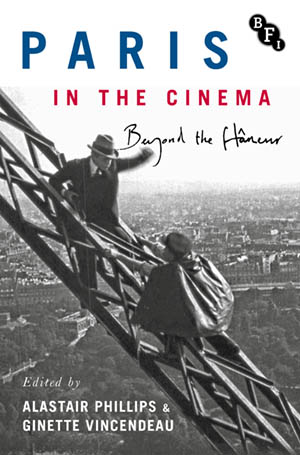
Paris in the Cinema. Beyond the Flaneur (co-edited with Ginette Vincendeau) (London: British Film Institute, 2017).
-
The Blackwell Companion to Jean Renoir (co-edited with Ginette Vincendeau) (Hoboken and Oxford: Wiley-Blackwell, 2013).
-
Rififi (French Film Guide) (London and New York: I.B. Tauris, 2009)
-
100 Film Noirs (co-authored with Jim Hillier) (London: British Film Institute, 2008).
-
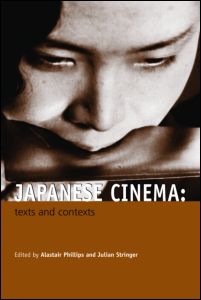
Japanese Cinema: Texts and Contexts (co-edited with Julian Stringer) (London and New York: Routledge, 2007).
-
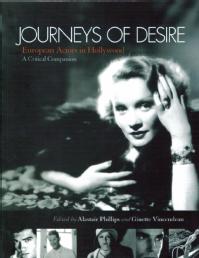
Journeys of Desire. European Actors in Hollywood (co-edited with Ginette Vincendeau) (London: British Film Institute, 2006).
-
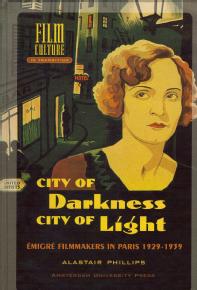
City of Darkness, City of Light. Émigré Filmmakers in Paris 1929-1939 (Amsterdam: Amsterdam University Press, 2004).
Articles
- 'Definition and Progression: Ozu Yasujiro's "Noriko Trilogy"' in David Scott Diffrient and Kenneth Chan (eds.) East Asian Film Remakes (Edinburgh: Edinburgh University Press, 2023).
- 'Contingencies of the Everyday: Screen Representations of Tokyo' in François Penz and Janina Schupp (eds.) The Everyday in Visual Culture: Slices of Lives (New York: Routledge, 2022).
- 'Tokyo 1958' in Hideaki Fujiki and Alastair Phillips (eds.) The Japanese Cinema Book (London: British Film Institute, 2020).
- ‘Unremarkable Paris. Jacques Becker and the Urban Everyday’ in Alastair Phillips and Ginette Vincendeau (eds.) Paris in the Cinema. Beyond the Flaneur (London: British Film Institute, 2017).
- ‘Seeing With His Own Eyes: Renoir and Photography’ in Alastair Phillips and Ginette Vincendeau (eds.) A Companion to Jean Renoir (Hoboken and Oxford: Wiley Blackwell, 2013).
- ‘The 400 Blows. Youth and Entrapment in the French New Wave’ in Jeffrey Geiger and R. L. Rutsky (eds.) Film Analysis: A Norton Reader (2nd ed.) (New York: W. W. Norton, 2013).
- ‘Cinematic Boundaries. Alexander Sokurov’s The Sun (2005) as Liminal Biopic’ in Tom Brown and Belen Vidal (eds.), The Biopic in Contemporary Film Culture (New York and London: Routledge, 2013).
- ‘Criss Crossed. Film Noir and the Politics of Mobility and Exchange’ in Helen Hanson and Andrew Spicer (eds.), The Blackwell Companion to Film Noir (Hoboken and Oxford: Wiley-Blackwell, 2013).
- ‘Placing French Film History’ in Will Higbee and Sarah Leahy (eds.) Studies in French Cinema: UK Perspectives 1985-2010 (Bristol: Intellect Press, 2011).
- ‘Fractured Landscapes: Detection, Location and History in Uchida Tomu’s Fugitive From the Past (1965)', Screen Vol. 52 no. 1 (Summer 2011).
- ‘The Salaryman’s Panic Time: Ozu Yasujiro’s I Was Born But” in Alastair Phillips and Julian Stringer (eds.) Japanese Cinema: Texts and Contexts (London and New York: Routledge, 2007).
- ‘Unsettled Visions: Imamura Shohei’s Vengeance is Mine’ in Alastair Phillips and Julian Stringer (eds.) Japanese Cinema: Texts and Contexts (London and New York: Routledge, 2007).
- ‘Changing Bodies / Changing Voices. Success and Failure in Hollywood in the Early Sound Era’ in Alastair Phillips and Ginette Vincendeau (eds.) Journeys of Desire. European Actors in Hollywood Cinema (London: British Film Institute, 2006).
- ‘Pictures of the Past in the Present. Modernity and Femininity in the Post-War Cinema of Ozu Yasujiro’ in Catherine Grant and Annette Kuhn (eds.) Screen Reader in World Cinema (Oxford: Oxford University Press, 2006).
- ‘Exile and Emigration in Classic French Cinema 1930-1950’ in Michael Temple and
Michael Witt (eds.) The French Cinema Book (London: British Film Institute, 2004). - 'The Camera Goes Down the Streets. Dans les rues (Victor Trivas, 1933) and the Paris of the German émigrés', Modern and Contemporary France Vol. 8 no. 3 (Autumn 2000).
-
‘Performing Paris. Myths of the City in Robert Siodmak's Émigré Musical La Vie Parisienne’, Screen Vol. 40 no. 3 (Autumn 1999).
- ‘La séductrice française No. 1: Le cas de “Martine Chérie”’, Iris, no. 26 (Autumn 1998).
Review articles
- 'Where Histories Reside: India as Filmed Space' in Bioscope Vol. 13 no. 1 (June 2022).
-
'In Search of Lost Screens. Remapping the Cultural History of Paris' in French Screen Studies (December 2021).
- 'The French Road Movie' in Journal of Contemporary European Studies Vol. 22 no. 2 (Summer 2014).
- 'Marcel Pagnol' in Modern and Contemporary France Vol. 22 no. 3 (Autumn 2014).
- 'The Cinema of Mikio Naruse' in Screen Vol. 52 no.3 (Autumn 2011).
- 'Nippon Modern' in Journal of Japanese and Korean Cinema Vol. 2 no. 2 (2011).
- 'Hollywood Asian: Philip Ahn and the Politics of Cross-Ethnic Performance and Sessue Hayakawa: Silent Cinema and Transnational Stardom' in Screen Vol. 49 no. 2 (Summer 2008).
- 'Film Noir and the Spaces of Modernity' in Screen Vol. 46 no. 2 (Summer 2005).
- 'An Accented Cinema. Exilic and Diasporic Filmmaking' in Screen Vol. 44 no. 3 (Autumn 2003).
-
'Julien Duvivier' in Modern and Contemporary France Vol. 10 no. 2 (Summer 2002).
Screen
- Screen Vol. 64:3 (Oxford University Press)
- Screen Vol. 63:2 (Oxford University Press)
- Screen Vol. 61:4 (Oxford University Press)
-
Screen Vol. 60:1 (Oxford University Press)
-
Screen Vol. 58:2 (Oxford University Press)
-
Screen Vol. 56:3 (Oxford University Press)
-
Screen Vol. 55:1 (Oxford University Press)
DVD essays
-
‘Unlocking The Glass Key’ in The Glass Key (Arrow DVD Publishing)
-
‘Motion Means Money' in Thieves Highway (Arrow DVD Publishing)
- ‘Just Close Enough’ in Naked City (Arrow DVD Publishing)
- ‘Jules Dassin: The Transnational History of French Film Noir’ in Rififi (Arrow DVD Publishing)
- 'Unsettled Visions: Imamura Shohei's Vengeance is Mine' in Vengeance is Mine (Masters of Cinema)
Teaching
I have taught across many areas of international film history, culture and aesthetics including French and Japanese cinema, contemporary world cinema (cities and landscapes), transnational genre cinema (film noir) and European film festivals past and present.
I am interested in supervising postgraduate projects related to international film history, contemporary world cinema, the cinematic representation of place and general issues of film historiography and audiovisual aesthetics.
I have supervised various PhD theses to completion on topics that include:
- the representation of Kyoto on film
- montage aesthetics and the film and television adaptations of Berlin Alexanderplatz
- the representation of the everyday in the films of Ozu Yasujiro
- cinema and the politics of displaced nationhood
- Seijun Suzuki and the aesthetics of negativity
- Ernst Lubitsch and the concept of ‘the Lubitsch touch’
- the queer poetics of Jacques Demy
- the representation of space and place in contemporary Romanian and Hungarian cinema.
I am currently supervising five PhD theses on:
- kinship, space and place in the films of Hirokazu Kore-eda
- the cinematic city of Tokyo in the 1980s
- the 'edgeland' in British film and television
- 'audiovisuality' and the figure of the Japanese female screen idol
- the postwar stardom of Ayako Wakao
Administrative roles
- Director of Student Experience
- Director: PhD Programme in Global Screen Studies (with Nagoya University)
- Departmental Representative: Warwick/Monash Alliance
Professional associations
I am a member of BAFTSS (British Association of Film, Television and Screen Studies) and the British Film Institute.
Teaching
2023-2024
I am on research and unpaid leave until the Summer term of 2024.
Feedback and Advice Hours
Summer term 2024
Weekly appointments - either in person in my office or online via MS Teams - may be scheduled via the FTV Moodle Hub. Do get in touch with me via email if you wish to set up an alternative arrangement.