Public Engagement
Part of the Centre's mission is to engage the local community and the public at large with the history of medicine as a discipline relevant to contemporary concerns, and to do so in creative and innovative ways. (Please also see our Radio, Video and Podcasts).
Below are some of the public engagement projects and activities that we have undertaken recently, or that are now in development:
Current: |
|
 |
Last Taboo of MotherhoodThe Last Taboo of Motherhood is a series of three individual audio plays illuminating an area of women’s health which has been historically overlooked: postnatal mental illness. The project draws on research by Dr Kelly Couzens, Dr Fabiola Creed and Professor Hilary Marland, and is informed by a variety of historical sources, including first hand testimonies from and by women in twentieth-century Britain. These pieces probe vital questions about women’s experiences and the pervasive culture of silence around maternal mental health. Tour Dates |
 |
People's History of the NHSAs part of the major 'Cultural History of the NHS' project, we have created a website to become a gallery and encyclopoedia of people's memories and thoughts about their personal experience of the NHS. NHS patients, staff and others are invited to contribute stories, images, jokes etc. There will also be a wide-ranging programme of events throughout the project lifetime, leading up to the NHS's 70th anniversary in 2018 and beyond. |
The Story of Our StreetsProfessor Roberta Bivins is working with Dr Sarah Richardson (Warwick, History), Warwick students and the citizens of Coventry to research governmental and other reports on the health of Coventry and map them onto Coventry's streets. This is part of Coventry's City of Culture programme of activities. |
|
Previously Undertaken: |
|
 |
Asylum Trilogy part 3: Disorder ContainedProfessor Hilary Marland, after previously collaborating with theatre company Talking Birds on Trade in Lunacy and A Malady of Migration, has delivered the final instalment of the Asylum Trilogy which explores various aspects of the history of mental health. Disorder Contained continued her work with project partner Associate Professor Catherine Cox (UCD) and considers the disastrous effect of the introduction of solitary confinement on prisoners’ mental health. This is part of the Wellcome Trust funded 'Prisoners, Medical Care and Entitlement to Health' project. |
 |
Internship Programme at Health ExchangeWorking in partnership with Health Exchange, we have set up a work experience programme for doctoral students nearing the end of their studies to experience life in the voluntary sector. |
 |
History & Policy Forum on ParentingAngela Davis and Laura King of Leeds have set up a forum on Parenting, with a series of events and ongoing exchanges via social media. |
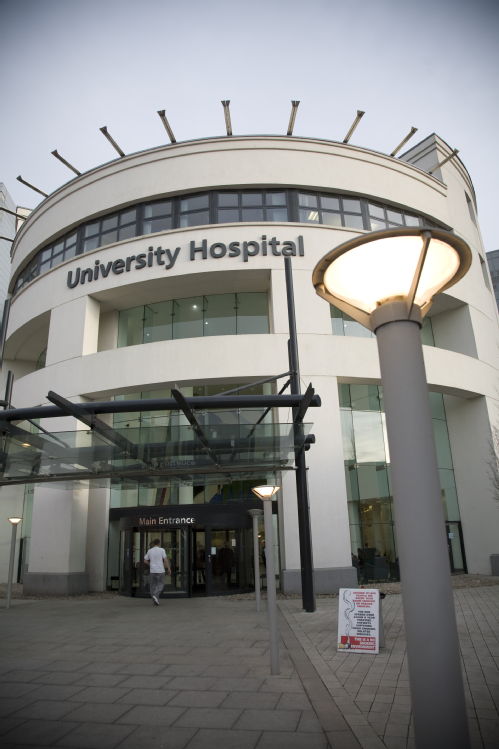 |
Internship Programme at University Hospital Coventry & WarwickshireThis project has come out of earlier work with the old Coventry & Warwickshire Hospital (see below). It draws on resources created during that work, and on current students' own research, to explore the history of medicine in Coventry and Warwickshire, and broader themes in the Medical Humanities. Postgraduate students from CHM are undertaking internships at UHCW to further their own research, and to make links between CHM, the hospital, community groups and arts organisations.
|
 |
IDEA: Improving the Delivery of Ethnically Appropriate Research, Services and PolicyDr Roberta Bivins |
 |
Asylum Trilogy part 2: A Malady of MigrationProfessor Hilary Marland, after successfully collaborating with Talking Birds on 'Trade in Lunacy', completed a second phase of the project, working with Dr Catherine Cox (UCD) and Talking Birds: a production relating to Madness and Migration, funded by the Wellcome Trust project: Madness, Migration and the Irish in Lancashire, c.1850-1921 |
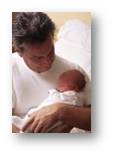 |
Hiding in the Pub to Cutting the Cord? Fatherhood and Childbirth in Britain from the 1950s to the PresentOver the last fifty to sixty years, a complete transformation has taken place in the role of fathers in their children’s births. Once considered ‘unmanly’ to take any part in the rituals surrounding childbirth, the presence and participation of men in this major event is now considered essential. As such, men are encouraged to attend ante-natal classes, support their partners throughout pregnancy and beyond, and even cut the umbilical cord once the baby has been born. Likewise, those fathers that fail or refuse to attend are condemned as unsupportive and uninterested husbands and fathers. |
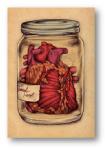 |
Inside the Irish Giant: History, Science and ArtThe Irish Giant by Cartoon de Salvo : Developed in close collaboration with a medical ethicist and a medical historian, this work-in-progress performance plunges its bloody hands into Byrne's history to discover: who owns our bodies - and who should? Are we all just flesh and bone? And how do you live when death is daily shadowing your every step...? Intellectually the production asks important and timeless questions about what it means to be human in the past and present, and of the relationship between science, faith and commerce. Can our belief in the ‘usefulness’ of science justify the disregard of other beliefs and value systems? How ‘valuable’ is human life? A night of theatre making and scientific enquiry started with a chance to see this brand new show as it's being made followed by panel discussions about the impact and themes of the piece; Religion, Science and Commerce & Gigantism, Genetics and History. |
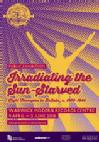 |
Irradiating the Sun-Starved: Light Therapies in Britain, c.1900-1940As part of the Wellcome Trust-funded project, 'Soaking Up the Rays: The Reception of Light Therapeutics in Britain, c.1899-1938', this exhibition (April-June 2013) featured a fascinating range of material - including illustrated textbooks, advertisements, lamps and goggles - relating to natural and artificial light therapies, c.1900-1940, highlighting their use in hospitals, sanatoria, and within the home. A public talk accompanied the exhibition, April 2013. |
|
|
Medical History, Immersive Museum Theatre, and ‘The Last Women’This project centred on a collaboration between the Centre for the History of Medicine and the Coventry-based Triangle theatre company. They worked together on Triangle's new production, 'The Last Women', inspired by the histories of Mary Ball, hanged in Coventry in 1849, and Ruth Ellis, the last woman hanged in Britain in 1955. The Last Women brought together historical research with improvisational enquiry in a series of formal and informal events and interactions between a company of seven actors, experts, young people, and other members of the public. Picture: Courtesy of Triangle Theatre |
| |
PolevaultProfessor Hilary Marland collaborated with Talking Birds as part of the ‘Polevault’ endeavour linked to their Olympic project: ‘Decathlon 2012’, providing commentary on mental illness and infanticide linked to canals for inclusion in an ‘audio walk’. |
|
|
|
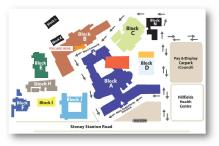 |
The Coventry and Warwickshire Hospital ProjectThe closure of the Coventry and Warwickshire Hospital in Coventry City Centre, and the Hospital’s relocation to a new purpose-built ‘super hospital’, marked a significant moment in the history of the NHS and pointed to the changing nature of health care in the UK. Through a programme of activity that took archiving, disseminating, and interacting as its key concerns, the Centre for the History of Medicine at Warwick sought to stimulate public discussion on a variety of issues, including the history of the Hospital, changes to the NHS, and the future role of hospitals and their place in the community. |
 |
Sexual Health Awareness WeekSexual Health Awareness week, the first of its kind on a university campus, explored the changing personal, national and global politics of sexual health, in particular HIV and AIDS, through art, drama, film, research, and critical discussion. It brought together staff, students, witnesses, charities and schools in a wide range of events and projects addressing sexual health. |
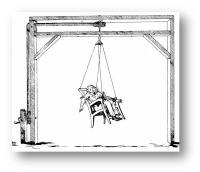 |
Trade in LunacyProfessor Hilary Marland with Talking Birds developed an 'Asylum' themed event (27-29 June 2013), including a site specific performance in the Shop Front Theatre - (Theatre Absolute) which focused on the history of mental disorder, its management and the development of a 'Trade in Lunacy'. |
 |
War, Memory, TraumaIn light of the major and enduring conflicts that have shaped the twentieth and twenty-first centuries, it is unsurprising that memory and trauma have emerged as highly visible, and at times contentious, concepts that are widely invoked by the public, the media, medical professionals and academics. How do service personnel cope with the stress of modern warfare? And how do they remember their experiences on the frontline? This project examining the psychological impact of modern war on servicemen will include a number of public events: a public lecture, poetry reading & exhibition and drop-in object handling sessions at the Herbert Art Gallery and Museum. |