Professor Hilary Marland
 |
Contact Information |
News Items:
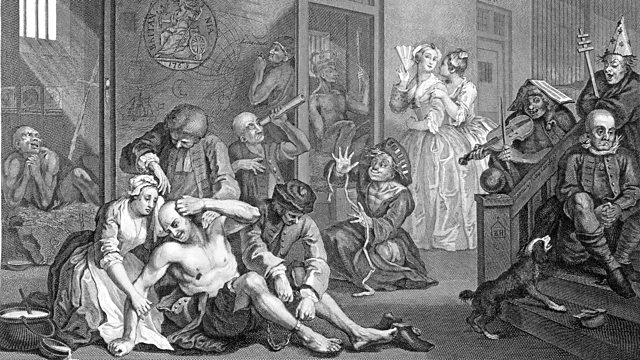 Listen to Hilary Marland on BBC 4 in Our Time 'Bedlam'
I am Principal Investigator on a Wellcome Trust Investigator Award 'The Last Taboo of Motherhood: Postnatal Mental Disorders in Twentieth-Century BritainLink opens in a new window' (2021-24). Together with two Postdoctoral Fellows, I am exploring changing diagnoses, treatment and attitudes towards maternal mental illness across the twentieth century, including increased interest in postnatal depression after the 1960s. Alongside our research, we are developing public engagement work with Fuel TheatreLink opens in a new window, involving the creation of three audio pieces responding to our research.
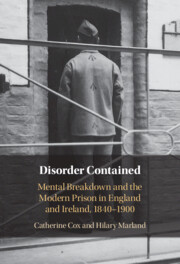
Between 2014 and 2021, I was Principal Investigator on another Wellcome funded project, 'Prisoners, Medical Care and Entitlement to Health in England and Ireland, 1850-2000'. My own interests lie particularly with the impact of prisons on mental health, women's health in prison and prison diet, and my book with Catherine Cox, Disorder Contained: Mental Breakdown and the Modern Prison in England and Ireland, 1840-1900Link opens in a new window, was published by Cambridge University Press in 2022. Work on the project resulted in several public outreach activities, including the production of a new theatre piece 'Disorder Contained', a theatre of testimony production, a week showcasing our project at Tate Modern (Tate Exchange), and several residencies in prisons, working with theatre companies specialising in producing work in criminal justice settings.
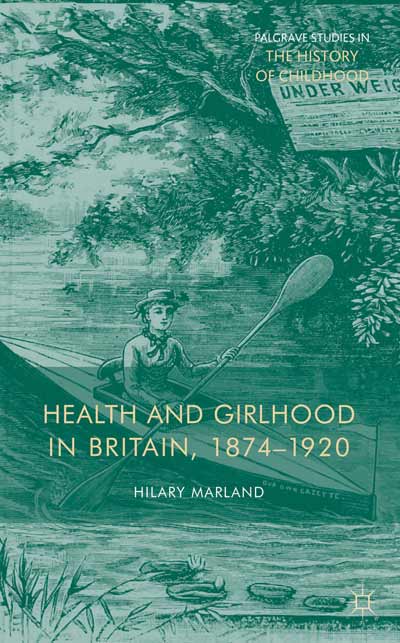
My research has also focused on other aspects of the social and cultural history of medicine and health, particularly in modern Britain. I have published on nineteenth-century medical practice, childbirth and midwifery, alternative medicine and hydropathy, women and medicine, girls' health, infant and maternal welfare, neurasthenia, child health, and medicine and the household. I have a long term interest in women and mental illness, particularly the relationship between reproduction and mental disorder, which resulted in my book Dangerous Motherhood: Insanity and Childbirth in Victorian Britain in 2004. In 2013 I published Health and Girlhood in Britain, 1874-1920, which explored the intersection of ideas of health, medicine and adolescence with the practice of health in schools, the workplace, and sport and recreation, particularly through the medium of advice literature. An earlier project with Dr Catherine Cox at UCD, explored Irish migration and mental illness between the Great Famine and Irish Independence, which resulted in a series of articles and a co-edited volume. In terms of public outreach, I have worked with Talking Birds theatre on 'The Trade in Lunacy', performed in June 2013, and a second piece 'A Malady of Migration' was produced in Coventry and Dublin in summer 2014. I am former editor of the journal Social History of Medicine and serve on the editorial board of History of Psychiatry. In 1998 I established the Centre for the History of Medicine at Warwick and served as its Director until 2008; during this period the CHM won two prestigious Strategic Awards from the Wellcome Trust. I took over as Director of the CHM once again 2015-17 and in 2018-19.
My current and recent PhD students have researched a variety of topics, including therapeutic activities in nineteenth-century asylums; clean eating; old age and mental illness in Victorian Britain; medicine and health in the Mediterranean islands; madness in Bourbon Mexico, 1713-1821; women and depression in interwar Britain; dirt, health and the home gardener in Britain, 1900-1970, and the history of Midland dispensaries 1820-1920. I am happy to receive applications of interest from students eager to study the history of mental health, prison medicine, women and medicine, the history of childbirth, and domestic practices of healing at postgraduate level.
Undergraduate Modules Taught
- HI156 Medicine, Disease and Society in Britain, 1750-1950
- HI278 From Cradle to Grave: Health, Medicine and Lifecycle in Modern Britain
- HI383 Madness and Society from Bedlam to the Present
Postgraduate Modules Taught
- HI907 Themes and Methods in Medical History (team taught)
- HI903 Dangerous Bodies: Women and Modern Medicine 1830-1950
- HI974 Migration, Health and Ethnicity in Modern History (with Roberta Bivins)
Publications
Books
- Catherine Cox and Hilary Marland, Disorder Contained: Mental Breakdown and the Modern Prison in England and Ireland,1840-1900Link opens in a new window (Cambridge University Press, 2022).
- Health and Girlhood in Britain, 1874-1920 (Houndmills: Palgrave-Macmillan, 2013).
- Dangerous Motherhood: Insanity and Childbirth in Victorian Britain (Houndmills: Palgrave-Macmillan, 2004).
- Medicine and Society in Wakefield and Huddersfield 1780-1870 (Cambridge University Press, 1987, republished in paperback 2008).
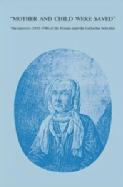
- 'Mother and Child were Saved'. The Memoirs (1693-1740) of the Frisian Midwife Catharina Schrader (Amsterdam: Editions Rodopi, 1987).
Edited Volumes
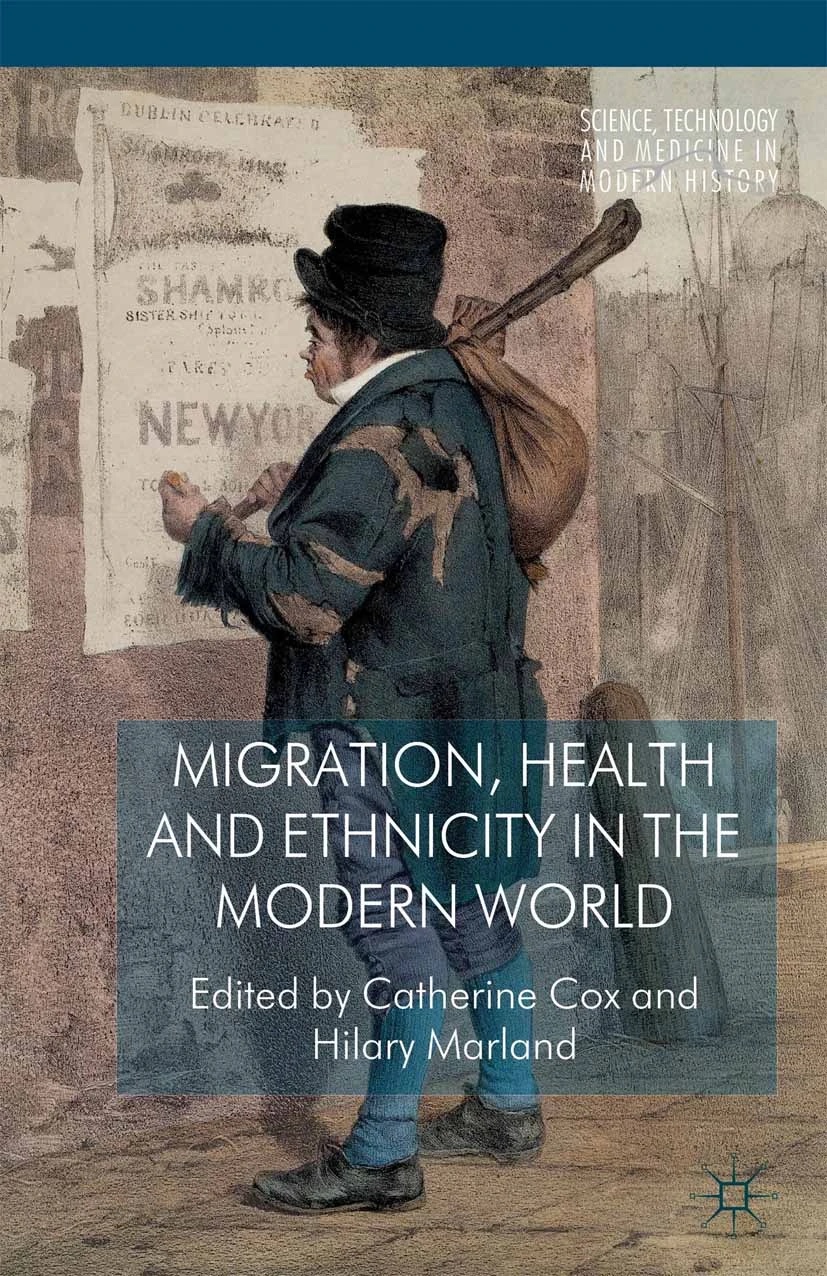
- Catherine Cox and Hilary Marland (eds), Migration, Health and Ethnicity in the Modern World (Houndmills: Palgrave-Macmillan, 2013).
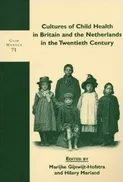
- Hilary Marland and Marijke Gijswijt-Hofstra (eds), Cultures of Child Health in Britain and the Netherlands in the Twentieth Century (Amsterdam and New York: Rodopi, 2003).
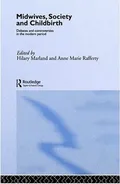
- Hilary Marland and Anne-Marie Rafferty (eds), Midwives, Society and Childbirth: Debates and Controversies in the Modern Period (London and New York: Routledge, 1997).
- Marijke Gijswijt-Hofstra, Hilary Marland and Hans de Waardt (eds), Illness and Healing Alternatives in Western Europe (London and New York: Routledge, 1997).
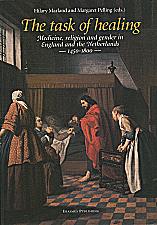
- Hilary Marland and Margaret Pelling (eds), The Task of Healing: Medicine, Religion and Gender in England and the Netherlands, 1450-1800 (Rotterdam: Erasmus Publishing, 1996).
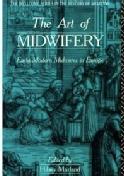
- Hilary Marland (ed.), The Art of Midwifery: Early Modern Midwives in Europe (London and New York: Routledge, 1993, 1994).
- Valerie Fildes, Lara Marks and Hilary Marland (eds), Women and Children First: International Maternal and Infant Welfare 1870-1945 (New York and London: Routledge, 1992, re-issued 2013).
Selected Articles
- '"Drowned in a Sea of Inhumanity": Natural Childbirth, Postnatal Depression and the National Childbirth Trust, 1956-80sLink opens in a new window', Social History of Medicine, published open access 31 October 2023.
- (With Fabiola Creed),'Improving Maternity Care though Women's Voices" The Women's Health Strategy Continues a Long Process of AdvocacyLink opens in a new window', History & Policy, 15 Feb. 2023.
- (With Catherine Cox), '"Unfit for Reform or Punishment": Mental Disorder and Discipline in Liverpool Borough Prison in the Late Nineteenth CenturyLink opens in a new window', Social History, 44 (2019), 173-201.
- (With Catherine Cox), 'Broken Minds and Beaten Bodies: Cultures of Harm and the Management of Mental Illness in Late Nineteenth Century England and Irish Prisons', Social History of Medicine, 31 (2018), 688-710.
- (With Catherine Cox), '"He must die or go mad in this place": Prisoners, Insanity and the Pentonville Model Prison Experiment, 1842-1852', Bulletin of the History of Medicine, 92 (2018), 78-109.
- (With Catherine Cox), '"A Burden on the County": Madness, Institutions of Confinement and the Irish Patient in Victorian Lancashire’, Social History of Medicine, 28 (2015), 263-87.
- (With Catherine Cox and Sarah York), 'Emaciated, Exhausted and Excited: The Bodies and Minds of the Irish in Nineteenth-Century Lancashire Asylums', Journal of Social History, 46 (2012), 500-24.
- ‘Under the Shadow of Maternity: Birth, Death and Puerperal Insanity in Victorian Britain’, History of Psychiatry, 23 (2012), 78-90.
- ‘Women, Health and Medicine’, in Mark Jackson (ed.), The Oxford Handbook of the History of Medicine (Oxford University Press, 2011), 484-502.
- (With Jane Adams), 'Hydropathy at Home: The Water Cure and Domestic Healing in Mid-Nineteenth-Century Britain', Bulletin of the History of Medicine, 83 (2009), 499-529.
- (With Vicky Long), 'From Danger and Motherhood to Health and Beauty: Health Advice for the Factory Girl in Early Twentieth-Century Britain', Twentieth Century British History, 20 (2009), 454-81.
- 'The Changing Shape of the Hospital, 1800-1900', in Deborah Brunton (ed.), Medicine Transformed: Health, Disease and Society in Europe, 1800-1930, OUP Course Book, A218 (Manchester University Press, 2004), 49-78.
- 'Midwives, Missions and Reform: Colonizing Dutch Childbirth Services at Home and Abroad ca. 1900', in Mary P. Sutphen and Bridie Andrews (eds), Medicine and Colonial Identity (London and New York: Routledge, 2003), 61-78.
- 'Getting Away with Murder?: Puerperal Insanity, Infanticide and the Defence Plea', in Mark Jackson (ed.), Infanticide: Historical Perspectives on Child Murder and Its Concealment, 1550-2000 (London: Athlone, 2002). 168-92.
- 'Smooth, Speedy, Painless and Still Midwife Delivered? The Dutch Midwife and Childbirth Technology in the Early Twentieth Century', in L. Conrad and A. Hardy (eds), Women in Modern Medicine, Wellcome Institute Series in the History of Medicine (Amsterdam and Atlanta, GA: Rodopi, 2001), 173-94.
- '"Uterine Mischief": W.S. Playfair and his Neurasthenic Patients', in Marijke Gijswijt-Hofstra and Roy Porter (eds), Cultures of Neurasthenia from Beard to the First World War, Wellcome Series in the History of Medicine (Amsterdam and Atlanta, GA: Rodopi, 2001), 117-39.
- 'Childbirth and Maternity', in Roger Cooter and John Pickstone (eds), Medicine in the Twentieth Century (Amsterdam: Harwood International, 2000), 559-74.
- '"Destined to a Perfect Recovery": The Confinement of Puerperal Insanity in the Nineteenth Century', in J. Melling and B. Forsythe (eds), Insanity, Institutions and Society, 1800-1914 (London and New York: Routledge, 1999), 137-56.
- 'A Pioneer in Infant Welfare: The Huddersfield Scheme 1903-1920', Social History of Medicine, 5 (1993), 25-49.
- 'Questions of Competence: The Midwife Debate in the Netherlands in the Early Twentieth Century', Medical History, 39 (1995), 317-37.
- '"Pioneer Work on all Sides": The First Generations of Women Physicians in the Netherlands, 1879-1930', Journal of the History of Medicine and Allied Sciences, 50 (1995), 437-73.