
Research
Excellence with purpose: Our expert academics, teamed with the next generation of scientific leaders, produce some of the world’s best fundamental and applied chemistry.*
Established ground-breakers and highly talented early-career researchers unite to deliver internationally excellent and world-class research across chemical science. Through close collaboration with the wider STEM community, our fundamental chemistry challenges the frontiers of knowledge for tomorrow.
Impactful research tackles the issues of today. Ambitious entrepreneurism and effective routes to real-world application ensures benefits to academia, industry, and society. Coupled with ongoing investment into state-of-the art facilities and infrastructure, we sit firmly at the forefront of science in the UK and beyond, both now and in the future as we grow to meet the rising demands for flexible, world-class research.
Our research themes
Chemical, Structural and Synthetic Biology

Developing highly interdisciplinary molecular and analytical approaches to understanding and exploiting biological systems for drug discovery, food security, sustainable chemicals and industrial biotechnology.
Latest news
New Warwick research is helping scientists preserve cells
New Method to Cryopreserve 3D Tissue Models
Materials and Polymers
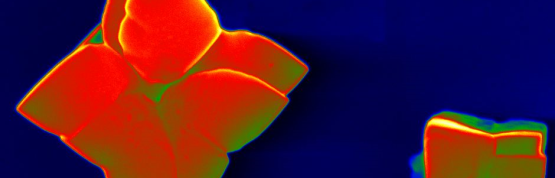
From solid-state inorganic materials to soft matter, real-world applications span catalysis, photovoltaics, ferroelectrics, petroadditives for cleaner fuel, personal care and medicine.
Latest news
A big step forward for Interface Polymers Ltd
PhD Student, Satarupa Das, attends GYSS 2024
Spin-out aims to launch a testosterone patch for menopausal women
Measurement and Modelling
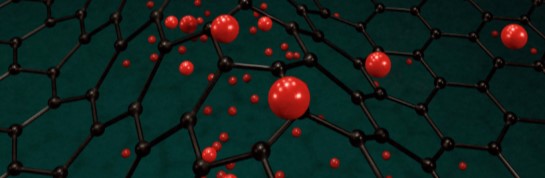
Original experimental measurements, theory and simulations underpin advances in electrochemistry, mass spectrometry, spectroscopy, surface analysis and computational chemistry.
Latest news
Towards universal software for quantum dynamics simulations
Graphene discovery could help generate hydrogen cheaply and sustainably
Computational Surface Science Group celebrates Successes
Synthesis and Catalysis

Innovative molecular design and advanced synthetic methodology reinforces multi-disciplinary research addressing grand challenges around energy, health and materials.
Latest news
Dr Mark Greenhalgh secures slice of £4m grant
Dr Sebastian Pike comments on the Nobel Prize in Chemistry 2023
Perfect Programmable Glyco-Materials
Further information
Featured Publication
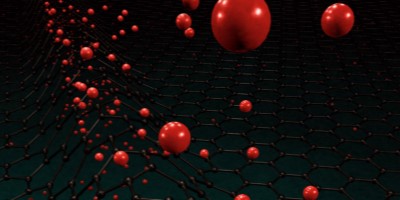
Researchers from Warwick and Manchester finally solve long-standing puzzle of why graphene is so much more permeable to protons than expected by theory. Read full paper in Nature at https://rdcu.be/dkede
*Accoring to THE anaylsis of REF 2021, we are ranked 9th for Research Power amongst UK Chemistry Departments and all of our assessed research outputs and impact case studies are world-leading or internationally excellent.