Our teaching
Inspiring support from some of the best academics working in mathematics today.
Supporting you with exceptional teaching
The timetable is full and the topics challenging, but the support you will receive will be equally as intense. We want you to have a fulfilling university experience. Your personal tutor facilitates your academic progress and looks out for your well-being, and lectures are supported by supervision with postgraduate students.
How we teach Maths at Warwick
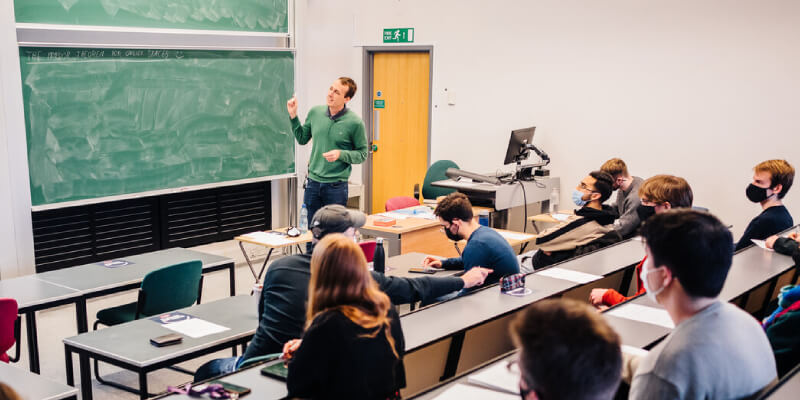
Most of our teaching is through lectures. Most modules have 3 hours of lectures per week, and these are delivered by a member of our academic staff.
A typical undergraduate timetable for a Warwick maths student would include 5 modules – and, therefore,15 hours of lectures per week- in each of terms 1 and 2. Term 3 is dedicated to revision and examinations. In addition to your lectures, you'll also have two supervisions per week. These are where you will work in small groups to go through your lecture material, and will be supported to do so by either a fourth year or PhD student - a role you might also take on later in your degree! There is more information about supervisions further down this page.
How we support you
While the number of lectures does mean that your timetable will be full of challenging topics, the support you will receive throughout will be equally as intense. You’ll have a personal tutor to look after both your academic progress and your personal wellbeing, while our lectures are supported by collaborative supervisions that are led by postgraduate students.
Personal tutors
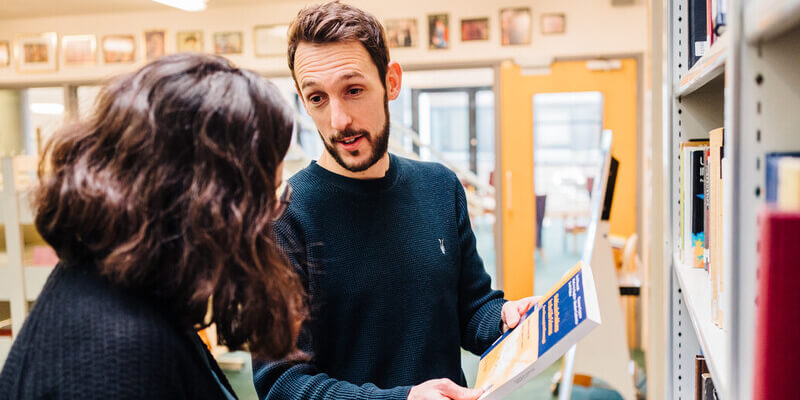
Your personal tutor is your first contact on the University staff. They will want to know you as an individual, know how you are getting on, what is going well for you, what problems you have and how you are dealing with them, and assist where necessary.
Your personal tutor is a great support, they will provide references for you to employers at the end of your time at University and speak on your behalf to exam boards if needed.
Supervisions
One of the key differences to studying maths at Warwick is our supervisions. These are where you will cluster round a chalkboard in small groups and have the chance to further explore what you’ve learned in your lectures and collaborate when working through examples.
The sessions are led by either a postgraduate or a fourth-year student who will been in your seat only a few years earlier, and so offer some fantastic additional support to your learning. They also mark your homework, offer feedback, and give you an alternative point of view from your lecturers.
World-leading academics
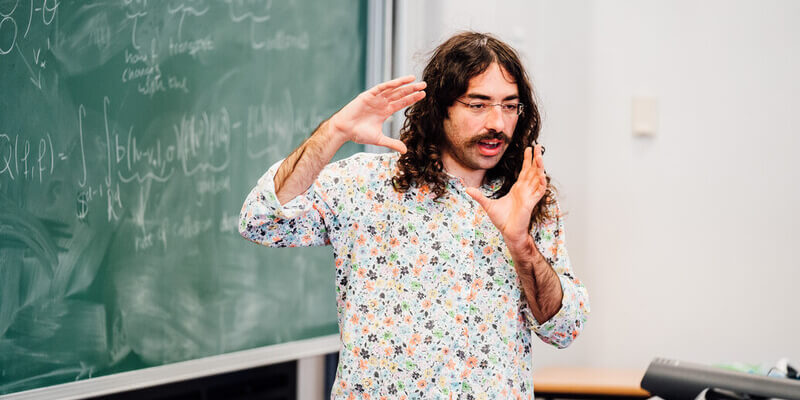
Our research is driven by our desire to advance the field of mathematics, while also solving real-world problems. Our academics are the brilliant people doing this work, and they’re also the brilliant people who will be teaching you.
Thinking of studying Mathematics at Warwick?
Our courses
As a Warwick undergraduate, you are free to do 100% maths. However, if you prefer, we also offer joint degrees featuring modules from some of the other world-class departments at Warwick.
Entrance exam
If you are applying to study any Undergraduate Mathematics course at the University of Warwick we ask many of our applicants to sit the TMUA, MAT, or STEP exams.
Our department is designed to help you immerse yourself in mathematics. Our courses help you in collaborating, discussing, socialising and making life-long friendships.
Visit us
There are plenty of ways to experience our department before you apply, including:
- University Open Days
- Offer Holder Open Days
- Live Chats
- Virtual 360 Campus Tours