
Warwick Public Lectures in Mathematics and Statistics
Hosted by the Department of Statistics
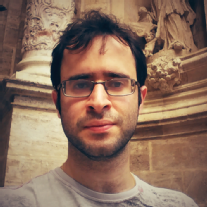
Three Puzzles about Pricing and Geometry
Renato Paes Leme, Google Research New York
Thursday 4th May 2023 - MS.01 Zeeman building, at 18:15
As the famous Graham-Buffet quote says “price is what you pay; value is what you get" and every business success or failure is driven by the match or mismatch of the two. We will discuss a simple question in pricing algorithms: how to adjust prices over time to learn a buyer's valuation while minimizing revenue loss. This is a nice puzzle with a surprising solution. We will discuss the Kleinberg-Leighton algorithm and how to generalize it to multi-dimensional settings. There, we will do a detour to convex geometry and the theory of intrinsic volumes. We will also discuss how to measure the length of a potato.
Free attendance
There will be a reception after the lecture
Main contact point: K.G.Latuszynski@warwick.ac.uk
Zipped archive of supporting materialsLink opens in a new window.
Hosted by the Department of Statistics
This Public Lecture is co-sponsored by the local RSS Group
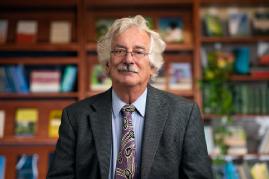
The Confidence Trap: How to Lose the Climate Debate
Roger M. Cooke
Wednesday 8th June 2022 - MS.01 Zeeman building, from 18:15 to 19:15
The scientific debate on the need for climate action is over, yet science is losing the public debate. Apparently the climate science communicators are doing something very wrong. Fabrication of facts, scriptural snake oil, gerrymandered proof burdens, bloated overconfidence and outright lies – these are among the miasmas fouling the public debate about climate change. It is not surprising that interest groups try these stratagems, the surprise is that they are successful. A snarly cognitive illusion called the Confidence Trap prevents us from dealing rationally with climate uncertainties (a cognitive illusion is like an optical illusion involving the brain instead of the eyes). After a ‘syllabus of errors’, this talk focuses on better ways to capture and incorporate expert’s judgments on climate change. Structured expert judgment was developed in risk analysis and has seen a wide range of applications from nuclear safety, public health, investment banking to policy analysis and natural hazards. It has recently entered the climate debate in earnest. Can it help? It’s time to find out.
Free attendance
There will be a reception after the lecture
Main contact point: Leonardo T. Rolla <Leonardo.Rolla@warwick.ac.uk>
Flyer in printable PDFLink opens in a new window and zipped image archiveLink opens in a new window.
Hosted by the Warwick Statistics Society
Towards more representative social sensing: Demographic inference and population estimates from multilingual social media data
Thursday 21st November 6:15 pm, Mathematical Sciences Atrium
The Warwick Statistics Society welcomes you to our talk: Deep Learning on Social Media Data.
Dr. Scott Hale from the Oxford Internet Institute will discuss pioneering new algorithmic tools to infer information from multilingual social media data.
We generate unprecedented quantities of data through our online social interactions that, through new computational approaches, enable social science research at scale. Dr Hale will show how joint consideration of text and image data from social media profiles can lead to more accurate estimations of age, gender, and organization-status of users than text or image data alone. The multimodal deep neural architecture created operates in 32 languages and substantially outperforms current state of the art while also reducing algorithmic bias. The inferred demographics can then be used to correct for sampling biases in social media data. In a large experiment over multilingual heterogeneous European regions, we show that our demographic inference and bias correction together allow for more accurate estimates of populations and make a significant step towards representative social sensing in downstream applications with multilingual social media.
Bio:Dr Scott A. Hale is a Senior Research Fellow at the Oxford Internet Institute, University of Oxford, Director of Research at Meedan, and a Fellow at the Alan Turing Institute. His cross-disciplinary research develops and applies new computational science techniques to social science questions and puts the results into practice with industry and policy partners. He is particularly interested in multilingual natural language processing, machine learning, agenda setting, and antisocial behaviour (e.g., hate speech) and has a strong track record in building tools and teaching programmes that enable wider access new methods and forms of data.
This talk will be accessible to people from a non-statistical or mathematical background.
Drinks and nibbles will be provided from 6:15 with the talk taking place at 6:45 in MS0.1
Register here: https://warwick.ac.uk/statistics/news/wplms/wsspubliclecture/
************************
More information about the research on which this talk is based can be found here
More information about the Oxford Internet Institute can be found here: https://www.oii.ox.ac.uk/
More information about the Warwick Statistics Society can be found here: http://warwickstatisticssociety.co.uk/
Hosted by the Department of Statistics
This Public Lecture is co-sponsored by the local RSS Group
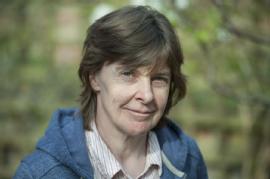
Modelling genes: the backwards and forwards of mathematical population genetics
Alison Etheridge OBE FRS - University of Oxford
Thursday May 16th, 2019 - MS.01 Zeeman building (Maths and Stats), at 6:15pm
When Mendelian genetics was rediscovered at the beginning of the 20th Century, it was widely believed to be incompatible with Darwin's theory of natural selection. The mathematical sciences, in the hands of pioneers such as Fisher, Haldane and Wright, played a fundamental role in the reconciliation of the two theories, and the new field of theoretical population genetics was born. But fundamental questions remained (and remain) unresolved. The genetic composition of a population can be changed by natural selection, mutation, mating, and other genetic, ecological and evolutionary mechanisms. How do they interact with one another, and what was their relative importance in shaping the patterns that we see today? Whereas the pioneers of the field could only observe genetic variation indirectly, by looking at traits of individuals in a population, researchers today have direct access to DNA sequences, but making sense of this wealth of data presents a major scientific challenge and mathematical models play a decisive role. In this lecture we'll discuss how to distill our understanding into workable models and then explore the remarkable power of simple mathematical caricatures in interrogating modern genetic data.
Free attendance. Register your interest here.
Refreshments will be served in the Main Atrium, Zeeman Building after the lecture.
For additional info please contact Paula Matthews at paula dot matthews at warwick dot ac dot uk
Hosted by the Department of Statistics 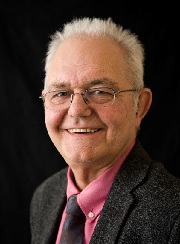
This Public Lecture is co-sponsored by the local RSS Group
Statistics: a data science for the twenty-first century
Peter Diggle - Lancaster University
Wednesday May 16th, 2018 - MS.01 Zeeman building (Maths and Stats), at 6:15pm
The rise of data science could be seen as a potental threat to the long-term status of the statistics discipline. In this lecture, I will argue that, although there is a threat, there is also a much greater opportunity to re-emphasize the universal relevance of statistical method to the interpretation of data. I will describe several recent research projects through which I hope to demonstrate that statistics makes an essential, but incomplete, contribution to the emerging field of ‘electronic health’ research, and will offer some personal thoughts on how the statistics discipline should seize the data science opportunity.
Peter Diggle is Distinguished University Professor of Statistics in the Faculty of Health and Medicine, Lancaster University. He also holds Adjunct positions at Johns Hopkins, Yale and Columbia Universities, and was president of the Royal Statistical Society (2014-2016).Between 1974 and 1983 Prof Diggle was a Lecturer, then Reader in Statistics at the University of Newcastle upon Tyne. Between 1984 and 1988 he was Senior,then Principal, then Chief Research Scientist and Chief of the Division of Mathematics and Statistics at CSIRO, Australia. Prof Diggle's research involves the development of statistical methods for spatial and longitudinal data analysis and their applications in the biomedical, health and environmental sciences. He was awarded the Royal Statistical Society's Guy Medal in Silver in 1997
Free attendance, register here. Refreshments will be served in the Main Atrium, Zeeman Building after the lecture
Hosted by the Mathematics Institute
2017-18 Warwick EPSRC Symposium: Geometry, Topology and Dynamics in Low Dimensions
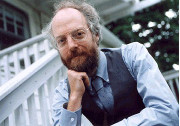
Jeff Weeks
The Shape of Space (poster )
Date and time: Monday 11th June 2018, 6.15pm
Venue: MS.02 Zeeman Building (Maths and Statistics), University of Warwick
When we look out on a clear night, the universe seems infinite...yet this infinity might be an illusion.
During the first half of the presentation, computer games will introduce the concept of a “multiconnected universe.”
Interactive 3D graphics will then take the viewer on a tour of several possible shapes for space. Finally, we’ll see how satellite data
provide tantalizing clues to the true shape of our universe.
The only prerequisites for this talk are curiosity and imagination. For secondary school students, Warwick students and staff,
people interested in astronomy, and all members of the local community.
Attendance is FREE! For further information on events at the Mathematics Institute, see: go.warwick.ac.uk/mathsevents
or contact: Mathematics Research Centre, Zeeman Building, University of Warwick, Coventry CV4 7AL, UK
E-mail: mrc@maths.warwick.ac.uk Phone: +44(0)24 7652 2681
Refreshments will be served in the Main Atrium, Zeeman Building after the lecture.
Previous lectures:
Hosted by the Mathematics Institute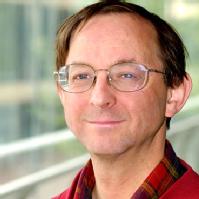
Chris Budd, University of Bath
Maths goes to the Movies (poster )
Date and time: Monday 4th December 2017, 6.15pm
Venue: MS.02 Zeeman Building (Maths and Statistics), University of Warwick
An enormous amount of our leisure time is spent interacting with the media, watching television and movies. Much of the space on our computers (and on the Internet) is taken up with static and moving images, and images are also extremely important in fields varying from medicine to crime protection. These images are stored as numbers, and mathematics can be used to create, manipulate and change them. Characters such as Shrek are actually a collection of triangles and other mathematical objects, demonstrating the role of mathematics in the creation of movies. This talk will provide insight into the world of movie making from a mathematician's perspective.
Attendance is FREE! Please register interest here.
Refreshments will be served in the Main Atrium, Zeeman Building after the lecture.
Hosted by the Department of Statistics
This Public Lecture is co-sponsored by the local RSS Group
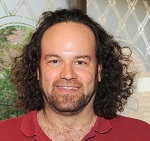
Jeff Rosenthal, University of Toronto
From Lotteries to Polls to Monte Carlo (poster )
)
Date and time: Wednesday 3rd May 2017, 6.15pm
Venue: MS.02 Zeeman Building (Maths and Statistics), University of Warwick
This talk will discuss randomness and probability, to answer such questions as: Just how unlikely is it to win a lottery jackpot? If you flip 100 coins, how close will the number of heads be to 50? How many dying patients must be saved to demonstrate that a new medical drug is effective? Why do strange coincidences occur so often? If a poll samples 1,000 people, how accurate are the results? How did statistics help to expose the Ontario Lottery Retailer Scandal? If two babies die in the same family without apparent cause, should the parents be convicted of murder? Why do casinos always make money, even though gamblers sometimes win and sometimes lose? And how is all of this related to Monte Carlo Algorithms, an extremely popular and effective method of scientific computing? No mathematical background is required to attend.
Attendance is FREE! Please register interest here.
Refreshments will be served in the Main Atrium, Zeeman Building after the lecture.

Hosted by the Department of Statistics
Professor Bernard Silverman FRS (Chief Scientific Adviser to the Home Office)
Mathematics and Science in the Home Office (poster)
Venue: MS.02, Zeeman Building (Maths and Statistics), University of Warwick.
How many victims of Modern Slavery are there? How long should it be legal to retain a DNA profile on someone who is arrested but not charged? How can we ensure you don’t wait too long to be checked when you enter the country? These and many other questions are the sort of thing where mathematics and statistics play a key role in Home Office policy and operations. I will explain both the role of a departmental Chief Scientific Adviser and also the wider work carried out by the Home Office Science organisation under my leadership. As well as describing some particular problems, such as those set out above, I will also reflect more widely on the way that science and evidence contribute to Government.
Attendance is FREE!
Refreshments will be served in the Main Atrium, Zeeman Building after the lecture.

Hosted by the Department of Statistics
Professor Sheila Bird OBE FRSE (MRC Biostatistics Unit)
Biostatistician behind bars (poster)
By design and on trial
Venue: MS.02, Zeeman Building (Maths and Statistics), University of Warwick.
For over 100 years, the MRC Biostatistics Unit has used statistics to investigate epidemics such as tuberculosis, cigarette smoking, HIV, heroin addiction and hepatitis C. Our findings are not always popular. I will describe how research into HIV, hepatitis B and heroin injection got us barred from Scottish prisons.
Naloxone is the heroin antidote that can save lives in the event of an overdose. Record-linkage studies led us to quantify a 7 times higher risk of overdose death amongst ex-prisoners shortly after release from prison. This enabled us to mount the pilot N-ALIVE trial in England, which measures the effectiveness of naloxone take-home kits at reducing drug related deaths.
Even before the N-ALIVE randomized controlled trial started in England, Scotland introduced take-home-naloxone as a funded public health policy. The 3-year results of Scotland's closely-monitored naloxone policy led us to stop the N-ALIVE trial. I will explain why.
Attendance is FREE!
Refreshments will be served in the Main Atrium, Zeeman Building after the lecture.
Hosted by the Mathematics Institute
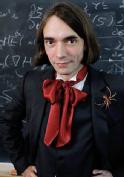
Professor Cédric Villani (University of Lyon)
The Amazing Theorems of Mr Nash (poster)
Venue: MS.02, Zeeman Building (Maths and Statistics), University of Warwick.
The scientific career of John Nash started with his celebrated contributions to "game theory", the subject of his doctoral thesis which he defended in 1950 at the age of 22. It is for this first contribution that he was awarded the economics Nobel prize in 1994!
After his PhD, John Nash turned to a very different area of mathematics. Between 1954 and 1958 he published three articles in which he proved three theorems that revolutionised mathematical analysis. For mathematicians, it is really for these three articles, more than for his work on game theory, that Nash deserves his place in the pantheon of mathematics. This talk will focus on one of these theorems by explaining its scope in simple terms and by insisting on the notion of regularity, central in Nash's work and in modern analysis in general.
Attendance is FREE!
Refreshments will be served in the Main Atrium, Zeeman Building after the lecture.
Cédric Villani · Wikipedia page on Nash  Video of the lecture
Hosted by the Department of Statistics
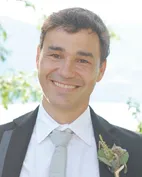
Professor Nando de Freitas (Professor of Computer Science, University of Oxford)
Data and the Brain (poster)
The impact of big data on learning deep neural models for speech, image and language understanding
In our quest to build deep neural models to reproduce different brain functions, we have discovered that it is of paramount importance to understand how data shapes the brain. Models that are learned from data are the best at many tasks such as speech recognition, language modelling and image understanding --- e.g., detecting where faces occur in photos and recognizing road features for self-driving cars. In this talk, I will describe how neuroscience, statistics and computer science have influenced the design of deep neural models, which have won many recent prediction competitions and have become state-of-the-art in image recognition tasks and speech recognition. I will argue that at present the complexity of our models is so large that big data is essential to learn these models appropriately.
Date: Wednesday 30 April, 2014
Nando de Freitas ·  Video of the lecture
Hosted by the Mathematics Institute
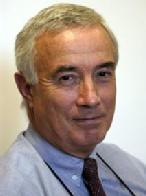
Professor Sir Roy Anderson (Imperial)
Plagues and People in the Modern World (poster )
The historical and epidemiological literature abound with accounts of infectious disease epidemics and of the concomitant effects on population abundance, social organisation and the unfolding pattern of historical events. Epidemics have long been a source of fear and fascination in human societies, but it is only in comparatively recent times that their origins and patterns have begun to yield their secrets through mathematical and scientific study.
The talk will examine the role played by predictive modelling in modern infectious disease epidemiology and will illustrate this by reference to past epidemics including the very recent H1N1 influenza pandemic (Did we overreact ? How can we better measure and predict pathogenicity? Will the H1N1 experience have a detrimental impact on how we respond to future epidemics?). The talk will also examine some of the neglected tropical diseases to address how can epidemiological modelling help the poorest societies in the world control infection and disease, and also help international agencies develop cost effective policies?
Date: Wednesday 12 February, 2014
Sir Roy Anderson
Hosted by the Department of Statistics
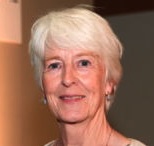
Professor Valerie Isham (University College London; Past President of the Royal Statistical Society)
Rainfall, Hydrology and Climate (poster)
Rainfall is the driving force for many hydrological processes. As has been all too apparent in recent months, rainfall that cannot be absorbed or drained away causes major flooding disasters worldwide and flood defences must be designed to cope with extreme events. Soil moisture provides the dynamic link between climate, soil and vegetation, and impacts plant dynamics as well as other processes at a range of spatial scales. Historical rainfall data are, perhaps surprisingly, often not available at the temporal and spatial resolution needed for hydrological design. Climate change poses an additional challenge, as rainfall data under future climate scenarios are needed for design purposes. The talk, aimed at a general audience, will illustrate some of the approaches taken by statistical modellers to provide and use artificial rainfall data to address these issues.
Date: Wednesday 8 May, 2013
Valerie Isham · Royal Statistical Society
Hosted by the Mathematics Institute
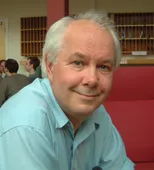
Professor Ian Stewart FRS (Dept of Mathematics, University of Warwick)
Turing's Tiger (poster)
2012 is the centenary of the birth of Alan Turing. Turing is best known for his wartime code-breaking work at Bletchley Park and his fundamental contributions to computer science and artificial intelligence, but he was also a pioneer of mathematical biology.
Many animals have striking markings: spots on a leopard, stripes on a tiger. How do they arise? In the early 1950s, Turing showed his colleagues a drawing with irregular black-and-white patches, asking them whether they agreed that it looked like a cow. In 1952 he published ‘the chemical basis of morphogenesis’, in which he proposed a mechanism for the creation of animal markings.
The resulting patterns are remarkably similar to those found on many animals, including convoluted stripes on fish and intricate patterns on seashells. The talk will be an informal, highly illustrated discussion of these Turing patterns in both mathematics and biology, with no technicalities.
Date: Monday 19 November, 2012
Ian Stewart · Wikipedia page on Turing ·
Hear Ian's lecture online

Hosted by the Department of Statistics
Peter Donnelly FRS, FMedSci (University of Oxford and Oxford Wellcome Trust)
The Genetic Revolution (poster)
Genetic factors are responsible for a substantial part of the susceptibility to all of the common diseases afflicting humans, including heart disease, diabetes, arthritis, depression, and many cancers and infectious diseases. Recent advances in genomic science have dramatically altered our ability to "read" genetic differences between people, leading to an explosion in our understanding of the genetic basis of most common human diseases. These new tools have led to an explosion in the amount and nature of genetic data available, with statistical analysis methods critical to the scientific progress. It won't be long before these changes have an impact on the practice of clinical medicine. Over a longer timeframe, they offer hope for new treatments for disease, and genetics is likely to become routine in some parts of medicine. The talk, aimed at a general audience, will give a sense of the excitement of the science and some of the statistical challenges, as well as the opportunities and challenges for our health and society.
Date: Wednesday 2nd May 2012
Peter Donnelly · Wellcome Trust Centre for Human Genetics ·
Hear Peter's lecture online
Hosted by the Mathematics Institute
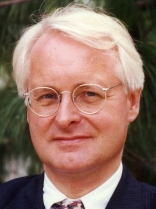
Hendrik Lenstra (University of California at Berkeley and University of Leiden)
Escher and the Droste Effect (poster)
This lecture is to shed light on the mind-bending art of Dutch artist Escher by taking a closer look at the mathematics behind his images. Professor Lenstra will look at Escher's 1956 work The Print Gallery, which depicts a swirling impossible world centred around a mysterious hole in the middle of the image.
The lecture will offer a fascinating insight into how art and maths work together. People often think of mathematics as something extremely specialised and abstract which is just not relevant to their daily lives. But the opposite is in fact true - mathematics runs through so much, whether it's the banking system or the music we listen to. It's not often you see mathematics and art together on the same bill but Escher's works are a great illustration of how the two are interlinked.
Date: Monday 28th November 2011
Hendrik W Lenstra · Official Escher website · Droste effect ·
Hear Hendrik's lecture online
Hosted by the Department of Statistics
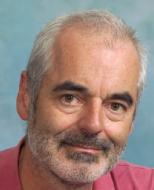
David J Spiegelhalter OBE, FRS (Winton Professor of the Public Understanding of Risk, University of Cambridge)
Living with risk and uncertainty — we're all going to die (sometime)
Past experience and probability theory can be used to check the odds of your football team winning or judge the risks of activities such as riding motorcycles, taking illegal drugs, going into hospital or just living. Things get more difficult when we don't fully understand what is going on, like early on in the swine-flu epidemic, or when we are dealing with huge complexity, as in climate change. Then it can be helpful to admit what we don't know, and I shall show how we can use probability and statistics to measure how ignorant you are.
Date: Monday 22nd November 2010