Skip to content Skip to navigation
University of Warwick
  • Study
  • |
  • Research
  • |
  • Business
  • |
  • Alumni
  • |
  • News
  • |
  • About
  • Text only
  • |
  • Sign in
  • Search Astronomy
  • Search Physics
  • Search University of Warwick
  • Search for people at Warwick
  • Search Warwick Blogs
  • Search past exam papers
  • Search video
  • More…

    Physics » Astronomy and Astrophysics Group

    • 3rd AM CVn workshop
    • Research
    • People
      • João Bento
      • Madelon Bours
      • Elmé Breedt
      • Philip Carter
      • Chris Copperwheat
      • Boris Gänsicke
      • Nicola Gentile Fusillo
      • Jonathan Girven
      • Sandra Greiss
      • Andrew Levan
      • Penélope Longa Peña
      • Tom Marsh
      • Matthew McNeany
      • Richard Palmer
      • Steven Parsons
      • Stelios Pyrzas
      • John Rostron
      • Elizabeth Stanway
      • Danny Steeghs
      • Rachel Tunnicliffe
      • Simon Walker
      • Peter Wheatley
    • PhD opportunities
    • Publications
    • Seminars
    • News archive
    • Outreach
    • Research impact
    • Local Information
    University of Warwick

    Elizabeth Stanway

    I am an Assistant Professor in the Astronomy group at the University of Warwick with a specific interest in observational cosmology, both at optical and radio wavelengths. The question of how the universe evolved, from the birth of the first stars to the highly structured and massive galaxies we see around us today, is one of the most fundamental that astrophysicists seek to address. It underpins our understanding of nearby galaxies, and is a key driver for the development of the next generation of telescopes. My main research interest is in the study of distant galaxies, taking a multi-wavelength approach to explore different components of the galaxies and the nature, lifetime and behaviour of star formation at early times in the universe. This can be divided into a number of interwoven subprojects.

    Lyman Break Galaxies at High Redshift

    Observations of the highest redshift galaxies play a central role in developing an understanding of how galaxies form and how they relate to the development of structure in the young Universe. In the past few years it has become possible to identify strongly star forming (Lyman break) galaxies at z=5 and above based on multiband photometry and follow-up spectroscopy. These galaxies are identified through the presence of a strong spectral continuum break caused by absorption shortwards of 1216 angstroms by intervening neutral hydrogen. Shortwards of this break galaxies appear to 'drop out' of observations, in the R-band at z=5, the I-band at z=6 and the Z- or Y-band at z=7. My work has helped to identify and characterise the galaxy population revealed using this method.

    Molecular Gas and Dust at High Redshift

    An association between sub-millimetre, active and star forming galaxies is now observationally well established. Each population traces peaks in mass density distribution, and different components of the underlying baryon distribution. As a result, any attempt to establish the physical conditions of star formation, its efficiency and its feedback on its environment must survey more than one type of emission, or be hopelessly incomplete. Observations at these long wavelengths are limited by the atmosphere, and by technology that lags behind optical telescopes in its sensitivity. As a result, work to date has been limited to bright, intrinsically-blue star forming galaxies. Older, dusty or less vigorous galaxies (which are redder) have been missed. In the next five years, new instruments and telescopes are going to change the way we look at the early universe, and let us explore properties of distant objects that have hitherto been invisible. Key amongst these are a radio telescope, ALMA, and the successor to Hubble, JWST.
    Together with collaborators, I have begun to explore distant galaxies both in molecular gas (e.g. Stanway et al 2008, Davies et al 2010) and in the dust continuum (e.g. Stanway et al 2010a).

    GRBs and GRB Host Galaxies

    In collaboration with Andrew Levan (Warwick), Malcolm Bremer (Bristol) and Nial Tanvir (Leicester), I am now using my expertise in distant galaxies and in radio observation to study GRB host galaxies - both to constrain their star formation properties using radio observations, and to study their molecular gas content at very high redshift). To date we have explored molecular gas in the field of a z=8 GRB Host galaxy (Stanway et al 2010b) and the radio continuum flux of GRB host galaxies at very low redshifts (Stanway, Levan and Davies, 2010), and are expanding this work to consider specific categories of GRB hosts at intermediate redshift.

    Local Analogues to z=5 LBGs

    I have obtained Spitzer/IRS data in order to study the properties of compact, intensely star-forming galaxies in the local universe that provide good analogues to the high redshift population. By examining nearby sources, we can obtain more information than is possible on faint, distant galaxies.

    Spectral Synthesis Including Massive Binaries

    Working with John Eldridge (IoA, Cambridge), I have been working on incorporating massive stars, and in particular their binary evolution pathways, into a spectral synthesis code. We are currently using this code to study the massive stellar populations of distant (z>2) galaxies by comparing model rest-UV and optical spectra to those observed. See Eldridge & Stanway (2009) and the BPASS website for details.

    Publications - see NASA/ADS for full list

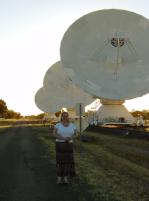
    astro_website_photo.jpg


    Write to:

    Dr Elizabeth Stanway,
    Department of Physics,
    University of Warwick,
    Coventry CV4 7AL
    UK


    Contact Details:

    Office: PS003
    Tel: +44 (0)247 615 0945
    Fax: +44 (0)247 669 2016
    E-Mail: e.r.stanway(at)warwick.ac.uk

    Contact us

    Telephone: +44 (024) 765 23965 Fax: +44 (024) 761 50897
    Email: physicsadmin at warwick dot ac dot uk

    Quick Links
    • Alumni and Careers Information
    • Physics Jobs at Warwick
    • Outreach Activities
    • Maps and Directions
    • Contact Us
    Close this email form
    Page contact: Elizabeth Stanway Last revised: Wed 23 Feb 2011
    • Sign in
    • |
    • Powered by Sitebuilder
    • |
    • © MMXII
    • |
    • Privacy
    • |
    • Accessibility