QuimP Software
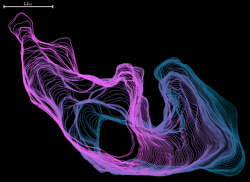
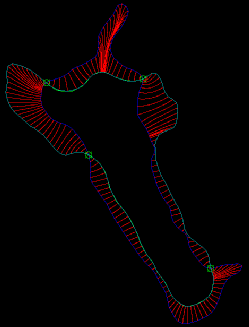
QuimP software, a set of plugins for ImageJ, has been developed by Till Bretschneider and Richard Tyson to quantify spatio-temporal patterns of fluorescently labeled proteins in the cortex of moving cells.
QuimP was first described in Dormann et al., 2002. For information on the classic version, now called QuimP1, please follow this link.
QuimP2 which was developed in collaboration with Leonard Bosgraaf (Bosgraaf et al., 2009) introduced a new method to correlate local cortical fluorescence with membrane movement. An obsolete QuimP2 installation package can be downloaded here (Unzip the archive and move the contents of the two folders according to their directory name. The help icon that appears when launching the QuimP toolbar provides an in depth explanation of how to use the associated plugins and the individual parameters). An addon for pseudopod analysis resulted in QuimP3 which however is not officially supported by the main QuimP development team (contact Leonard Bosgraaf for help instead).
QuimP11 is now available, superseding QuimP10. It includes a completely new semi-automated segmentation interface, a greatly improved boundary tracking method based on Richard Tyson's new ECMM method, muti-channel support, and extended documentation. Click here to download QuimP11. This new version is backward compatible with QuimP10.
QuimP is free software, but we ask you to register by filling out the form on the download page. Monitoring the demand is essential to apply for continued funding of QuimP. We most welcome any feedback which will help us to make QuimP better. Also, please let us know what you use it for.
QuimP has been used in the following labs:
Len Stephens, Babraham Institute, Cambridge
Ferguson, G.J., Milne, L., Kulkarni, S., Sasaki, T., Walker, S., Andrews, S., Crabbe, T., Finan, P., Jones, G., Jackson, S., Camps, M., Rommel, C., Wymann, M., Hirsch, E., Hawkins, P. & Stephens, L.
PI(3)Kgamma has an important context-dependent role in neutrophil chemokinesis.
Nat Cell Biol, 2007, Vol. 9(1), pp. 86-91
Rob Kay, MRC LMB, Cambridge
Zanchi, R., Howard, G., Bretscher, M.S. & Kay, R.R.
The exocytic gene secA is required for Dictyostelium cell motility and osmoregulation.
J Cell Sci, 2010, Vol. 123(Pt 19), pp. 3226-3234
Guenther Gerisch, Max-Planck-Institute of Biochemistry
Dalous, J., Burghardt, E., Mueller-Taubenberger, A., Bruckert, F., Gerisch, G. & Bretschneider, T.
Reversal of cell polarity and actin-myosin cytoskeleton reorganization under mechanical and chemical stimulation.
Biophys J, 2008, Vol. 94(3), pp. 1063-1074
Etzrodt, M., Ishikawa, H.C.F., Dalous, J., Mueller-Taubenberger, A., Bretschneider, T. & Gerisch, G.
Time-resolved responses to chemoattractant, characteristic of the front and tail of Dictyostelium cells.
FEBS Lett, 2006, Vol. 580(28-29), pp. 6707-6713
Bretschneider, T., Jonkman, J., Köhler, J., Medalia, O., Barisic, K., Weber, I., Stelzer, E.H.K., Baumeister, W. & Gerisch, G.
Dynamic organization of the actin system in the motile cells of Dictyostelium.
J Muscle Res Cell Motil, 2002, Vol. 23(7-8), pp. 639-649
Mueller-Taubenberger, A., Bretschneider, T., Faix, J., Konzok, A., Simmeth, E. & Weber, I.
Differential localization of the Dictyostelium kinase DPAKa during cytokinesis and cell migration.
J Muscle Res Cell Motil, 2002, Vol. 23(7-8), pp. 751-763
Kees Weijer, University of Dundee
Dormann, D., Weijer, G., Dowler, S. & Weijer, C.J.
In vivo analysis of 3-phosphoinositide dynamics during Dictyostelium phagocytosis and chemotaxis.
J Cell Sci, 2004, Vol. 117(Pt 26), pp. 6497-6509
Peter van Haastert, University of Groningen
Haastert, P.J.M.V.
A model for a correlated random walk based on the ordered extension of pseudopodia.
PLoS Comput Biol, 2010, Vol. 6(8)
Haastert, P.J.M.V. & Bosgraaf, L.
The local cell curvature guides pseudopodia towards chemoattractants.
HFSP J, 2009, Vol. 3(4), pp. 282-286
Haastert, P.J.M.V. & Bosgraaf, L.
Food searching strategy of amoeboid cells by starvation induced run length extension.
PLoS One, 2009, Vol. 4(8), pp. e6814
Bosgraaf, L. & Haastert, P.J.M.V.
Navigation of chemotactic cells by parallel signaling to pseudopod persistence and orientation.
PLoS One, 2009, Vol. 4(8), pp. e6842
Bosgraaf, L. & Haastert, P.J.M.V.
The ordered extension of pseudopodia by amoeboid cells in the absence of external cues.
PLoS One, 2009, Vol. 4(4), pp. e5253
Bosgraaf, L., Keizer-Gunnink, I. & Haastert, P.J.M.V.
PI3-kinase signaling contributes to orientation in shallow gradients and enhances speed in steep chemoattractant gradients.
J Cell Sci, The Netherlands., 2008, Vol. 121(Pt 21), pp. 3589-3597
Bosgraaf, L., Waijer, A., Engel, R., Visser, A.J.W.G., Wessels, D., Soll, D. & van Haastert, P.J.M.
RasGEF-containing proteins GbpC and GbpD have differential effects on cell polarity and chemotaxis in Dictyostelium.
J Cell Sci, 2005, Vol. 118(Pt 9), pp. 1899-1910
Papers describing the development of QuimP
Bosgraaf, L. & Haastert, P.J.M.V.
Quimp3, an automated pseudopod-tracking algorithm.
Cell Adh Migr, 2010, Vol. 4(1), pp. 46-55
Tyson, R.A., Epstein, D.B.A., Anderson, K.I. & Bretschneider, T.
High resolution tracking of cell membrane dynamics in moving cells: An electrifying approach.
Math. Model. Nat. Phenom., 2010, Vol. 5(1), pp. 34-55
Bosgraaf, L., van Haastert, P.J.M. & Bretschneider, T.
Analysis of cell movement by simultaneous quantification of local membrane displacement and fluorescent intensities using Quimp2.
Cell Motil Cytoskeleton, 2009, Vol. 66(3), pp. 156-165
Dormann, D., Libotte, T., Weijer, C.J. & Bretschneider, T.
Simultaneous quantification of cell motility and protein-membrane-association using active contours.
Cell Motil Cytoskeleton, 2002, Vol. 52(4), pp. 221-230