Alliance for Governance Research and Analysis (AGORA)

AGORA is the Alliance for Governance Research and Analysis that has been formed between CSGR, the Department for Business and Politics (DBP) at the Copenhagen Business School, the Watson Institute at Brown University, the Global Governance program at the Robert S. Strauss Center at the University of Texas at Austin, the Norwegian Institute for International Affairs (NUPI), and the Centre for Governance and Public Policy (CGPP) at Griffith University, Queensland.
AGORA's aim is to enhance research collaboration on issues related to international and global governance, including the roles of international organizations, professions, knowledge communities, policymakers, and business. AGORA brings together a range of new generation world-class academics and aims to foster early-career scholars. It will provide a virtual home for cutting edge research and faculty and graduate student exchange.
CSGR | Strauss Center | NUPI | CGPP | DBP | Watson
NEWS AND EVENTS
CfP- AGORA IV: ‘Emergent Ideas in the International Political Economy’, Copenhagen, December 6-7 2012
Workshop Theme
Debating whether ideas or interest matters has become old hat in the field of International Political Economy (IPE). Scholars developing work on ideational change and the role of norms and habit have argued for some time now that interests are ideas. This work has taken different forms, such as ‘agent-centered constructivism’, sociological institutionalism, discursive institutionalism, everyday IPE, critical realism, as well as scholars applying work from Bourdieu, Foucault, Gramsci, and Latour. The AGORA IV workshop provides a forum for stocktaking and moving forward with constructivist, critical, and post-structuralist IPE scholarship on ideational change. In particular, the workshop welcomes papers that study ideational emergence as a subject of investigation to unravel socio-economic and political change, be it at domestic, regional, international or transnational levels.
Organization
AGORA IV will be held at the Department of Business and Politics at the Copenhagen Business School on December 6 and 7 2012. The workshop is limited to a maximum of 10 presenters and is intended to be an interactive and friendly environment in which participants will receive constructive feedback on their work. We especially encourage proposals that are related to article-length or book-length scholarly research projects. The workshop will dedicate one hour to each participant's work: 5 minutes for presentation, 10 minutes of presentation of the argument by a discussant, and 10 minutes of critical engagement by a second discussant. The rest of the time is for Q&A.
About AGORA
AGORA is a worldwide network of scholarly institutes dedicated to the development of cutting-edge conceptual and policy-relevant work on pressing global governance issues. It is co-sponsored by Brown University (Providence, USA), the Copenhagen Business School (Copenhagen, Denmark), Griffith University (Brisbane, Australia), the Norwegian Institute for International Affairs (Oslo, Norway), the University of Texas at Austin (Austin, USA), and the University of Warwick (Coventry, UK).
Application process
Proposals should be no more than one page and are due by September 10. Please also attach a brief CV (no more than one page). Decisions will be made by September 24 and applicants will be notified by email. Please send applications to both Leonard Seabrooke (ls.dbp@cbs.dk) and Jason Sharman (j.sharman@griffith.edu.au).
Funding for travel/accomodation
Participants’ hotel costs and one dinner will be covered. Limited travel grants will be provided for non-AGORA paper givers to fly return to Copenhagen.
AGORA III: 'Statehood, Sovereignty, and Global Governance', Oslo, Norway, August 31-September 1st 2011
Workshop Theme
The last two decades of research on globalization has produced important insights about how global flows of material and symbolic resources have made the world smaller and shaped national societies in significant ways. A central part of this research has concerned the emergence and institutionalization of global-level prescriptions – advanced by non-state actors – about how states should govern. In re-conceptualizing international politics as global politics, dominant ideas about states as always and necessarily dominant has been challenged, enabling a shift in focus from the problem of order to the problem of governance, and towards an exploration of authority beyond the state. There are merits in these claims, but they are poorly equipped to account for the role that state governments had in responding to the financial crisis of 2008-2009; how conceptions of statehood found in emerging economies such as China are impacting on the global south; how states fund and cooperate with non-state actors that can advance their interests; how purportedly non-statist global norms – such as human security – are defined in ways that make states their ultimate guarantor; and how state representatives are central to allegedly non-statist transnational regulatory and expert networks. Thus, the re-conceptualization from international politics to global politics and the empirical focus on non-state actors has come at a price.
This is in part, it seems, because political scientists tend to define the state through a set of distinctions that sets it apart from its environment, the three most important ones being state-market, state-society, and domestic-international (inside-outside). Claims about the strength, functioning, and autonomy of the state under conditions of globalization have thus been produced mainly through studies whose primary focus has not been on the state, but on its environment. The “bringing the state back in” literature from the 1980s certainly made an important contribution in terms of highlighting the centrality of the state, but it seems necessary to refine theoretical tools and to re-assess empirical claims under conditions of globalization.
The motivation for this workshop is that without conceptual tools that can grasp how the state is perceived as distinct from other entities yet inherently shaped by and implicated in them, empirical analyses of statehood and globalization will overlook how the state is central to global governance yet significantly transformed by it. The workshop invites papers that span different disciplines (political science, sociology, anthropology, law). Papers that address the following issues are of particular interest:
- Conceptual and theoretical discussion of the state and state sovereignty under conditions of globalization
- Empirical studies that deal directly with boundaries between the state and other actors, and the state and other spheres (i.e. market, society), including how conceptions of governance (effectiveness etc) are at stake in these processes.
- Empirical studies of the anatomy and operations of transnational regulatory network comprising both state and non-state actors (revolving door phenomenon between domestic-international, for example).
Organization
The third AGORA workshop is hosted by the Centre for Global Governance at the Norwegian Institute of International Affairs and will be held in Oslo, Norway, on August 31-Sept 1, 2011. The workshop is limited to a maximum of 10 presenters and is intended to be an interactive and friendly environment in which participants will receive constructive feedback on their work in progress. We especially encourage proposals that are related to article-length or book-length scholarly research projects. We encourage applications from early career scholars. The workshop will dedicate one hour to each participant's work: 5 minutes for presentation, 10 minutes of critical analysis by an assigned discussant, and 45 minutes for open discussion. The entire workshop will be two days in length.
About AGORA
AGORA is a worldwide network of scholarly institutes dedicated to the development of policy-relevant work on pressing global governance issues. It is co-sponsored by Griffith University (Brisbane, Australia), the Copenhagen Business School (Copenhagen, Denmark) the Norwegian Institute for International Affairs (Oslo, Norway), the Watson Institute at Brown University (Providence,
Application process
Proposals should be no more than two pages in length and are due by June 1.st Please include a brief CV attached to your 2-page proposal. Decisions will be made by June 10th and applicants will be notified by email. Please send applications to Ole Jacob Sending (ojs@nupi.no) and Leonard Seabrooke (ls.dbp@cbs.dk).
Funding for travel/accomodation
Participants’ airfare (economy fare) and accommodation plus a workshop dinner will be covered by AGORA.
_________________________________________________________________________________________________________________________
14-01-2011
AGORA II: Institutional Diversity in the Governance of the Global Economy: New Actors, New Perpsectives
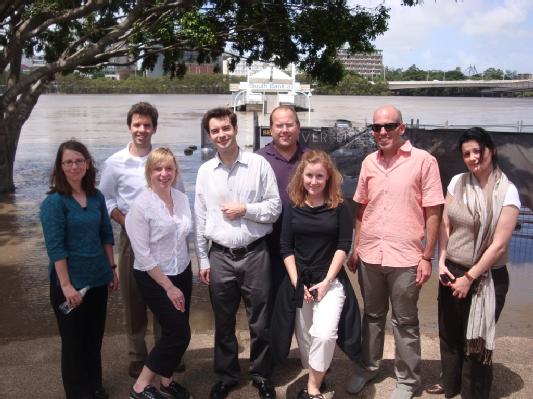
With support from CSGR and Griffith University, scholars from CSGR attended the AGORA II workshop in Brisbane at Griffith University. This workshop was limited to twelve papers, including contributions from Louise Walker (CSGR); Leonard Seabrooke (CBS/CSGR); Jason Sharman (Griffith); Jeff Chwieroth (LSE), Kate Weaver (University of Texas at Austin); Kristen Hopewell (Michigan); Anja Jakobi (PRIF); Matias Margulis (McMaster); Daniel Mugge (University of Amsterdam); Brad Parks (LSE); and Wesley Widmaier (Griffith). The workshop was conducted against the tragic backdrop of the Brisbane flood. Still, it was an engaging and stimulating workshop for all concerned. AGORA III will be held at the Norwegian Institute for International Affairs later in 2011.
------------------------------------------------------------------------------------------------------
14-08-2010
AGORA II: Call for Workshop Papers
“‘Institutional Diversity in Governance of the Global Economy: Beyond the Bretton Woods Institutions”
January 11-12, 2011
Griffith University
Brisbane, Australia
AGORA is a worldwide network of scholarly institutes dedicated to the development of policy-relevant work on pressing global governance issues. It is directed by Professor Len Seabrooke at the University of Warwick, United Kingdom, and is co-sponsored by Griffith University (Brisbane, Australia), the Norwegian Institute for International Affairs (Oslo, Norway), the Watson Institute at Brown University (Providence, Rhode Island, USA), the International Center for Business and Politics at the Copenhagen Business School (Copenhagen, Denmark), and the Robert S. Strauss Center for International Security & Law at the University of Texas (Austin, Texas, USA).
With support from Centre for Governance and Public Policy and the Griffith Asia Institute at Griffith University, AGORA is holding is second biannual research workshop in Brisbane, Australia on January11-12 2011. This workshop is limited to twelve presenters and is intended to be an interactive and friendly environment in which participants will receive constructive feedback on their work in progress.
The theme for the second meeting of the AGORA network is “Institutional Diversity in the Governance of the Global Economy.” We welcome proposals that speak directly to this topic, such as the emergence and role of new institutions and regimes (formal or non-formal) in the global governance of finance, trade and development, or papers that address the changing role and challenges to the existing institutions from the Bretton Woods era. We especially encourage proposals that are related to article-length or book-length research projects. The workshop will dedicate one hour to each participants’ work: 15 minutes for a presentation and discussion by another workshop participant), ten minutes for a critical analysis by an assigned discussant, and the 35 minutes for open discussion. The entire workshop will be two days in length and will include all meals.
Participants coming from outside of the Australia will be reimbursed up to $2500 for travel and lodging. Participants from inside Australia will be reimbursed up to $1000 for travel and lodging. Because of funding limitations and previously high application rates, we can only offer six places for external paper givers. We especially encourage applications from early career scholars.
APPLICATION PROCESS:
Proposals should be two-pages in length and are due August 1, 2011. Please also send a one-page CV. Decisions will be made by August 15, 2011 and applicants will be notified by email.
Please send a two-page description of your research topic and a one-page CV to both Len Seabrooke (L.Seabrooke@warwick.ac.uk), Director of AGORA, and Kate Weaver (ceweaver@austin.utexas.edu). Selection Committee Chair. Please submit the documents by email, and include your full contact information.
More details will follow in mid-2010. For more information, please contact any of the AGORA members listed below.
AGORA Selection Committee:
Leonard Seabrooke,
Director, Centre for the Study of Globalisation & Regionalisation
University of Warwick
Jason Sharman
Professor, Centre for Governance and Public Policy
Griffith University, Brisbane, Australia
Kate Weaver
Associate Professor, LBJ School of Public Affairs
Distinguished Scholar, Robert S. Strauss Center for International Security & Law
University of Texas at Austin
27-04-2010
AGORA Authors Announced
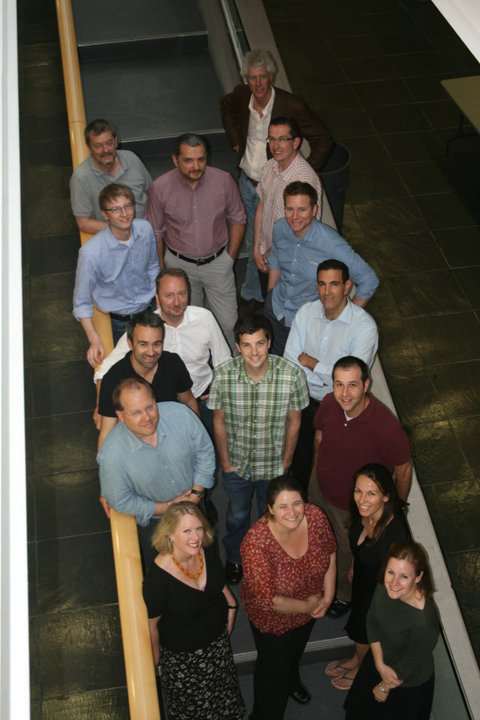
With support from CSGR and Brown University’s Watson Institute for International Studies, AGORA held its first biannual research workshop at Brown University from June 21-23, 2010. This workshop was limited to twelve papers and is intended to be an interactive and friendly environment in which participants will receive constructive feedback on their work in progress.
Andrew Baker (Queen's, Belfast)
Cornel Ban (Brown)
Ruth Ben Artzi (Providence)
John L. Campbell (Dartmouth)
Katharine Farrell (Autonomous University of Barcelona)
David Howarth (Edinburgh)
Steven Nelson (Northwestern)
Abraham Newman (Georgetown)
Ove Kaj Pedersen (CBS)
Tal Sadeh (Tel Aviv)
Ole Jacob Sending (NUPI)
Diane Stone (Warwick)
Jason Thistlewaite (Waterloo)
Eleni Tsingou (Warwick)
Discussants:
Mark Blyth (Brown)
Leonard Seabrooke (Warwick/CBS)
Kate Weaver (Austin)
Wesley Widmaier (Griffith)
For more information please e-mail: L.Seabrooke@warwick.ac.uk
22-03-10
“Knowledge Networks and Policy Communities in the Global Political Economy”
June 21-23, 2010
The Watson Institute for International Studies
Brown University
AGORA is a worldwide network of scholarly institutes dedicated to the development of policy-relevant work on pressing global governance issues. It is directed by Professor Len Seabrooke at the University of Warwick, United Kingdom, and is co-sponsored by Griffith University (Brisbane, Australia), the Norwegian Institute for International Affairs (Oslo, Norway), the Watson Institute at Brown University (Providence, Rhode Island, USA) and the Robert S. Strauss Center for International Security & Law at the University of Texas (Austin, Texas, USA).
With support from Brown University’s Watson Institute for International Studies, AGORA is holding is first biannual research workshop at Brown University from June 21-23, 2010. This workshop is limited to twelve presenters and is intended to be an interactive and friendly environment in which participants will receive constructive feedback on their work in progress.
The theme for the first meeting of the AGORA network is “Knowledge Networks and Policy Communities in the Global Political Economy”. We welcome proposals that speak directly to this topic. We especially encourage proposals that are related to article-length or book-length research projects. The workshop will dedicate one hour to each participants’ work: ten minutes for a presentation (by another workshop participant), ten minutes for a critical analysis by an assigned discussant, and 30 minutes for open discussion. The entire workshop will be two days in length and will include all meals.
US participants will be reimbursed for up to $1000 in travel and lodging costs. Participants coming from outside of the United States will be reimbursed up to $2000 for travel and lodging. We especially encourage applications from early career scholars.
APPLICATION PROCESS:
Proposals should be one-page in length and are due April 15, 2010. Decisions will be made by April 30, 2010 and applicants will be notified by email.
Please send a one-page description of your research topic by April 15, 2010 to both Len Seabrooke (L.Seabrooke@warwick.ac.uk), Director of AGORA, and Kate Weaver (ceweaver@austin.utexas.edu). Selection Committee Chair. Please submit your proposals by email, and include your full contact information.
More details will follow in mid-2010. For more information, please contact any of the AGORA members listed below.
AGORA Selection Committee:
Mark Blyth
Professor, Watson Institute for International Studies
Brown University
Leonard Seabrooke,
Director, Centre for the Study of Globalisation & Regionalisation
University of Warwick
Jason Sharman
Professor, Centre for Governance and Public Policy
Griffith University, Brisbane, Australia
Catherine Weaver
Distinguished Scholar and Research Coordinator
University of Texas at Austin
 |
  |
|
 |
 |
 |