
Research helps breeders really know their onions to enhance global food security
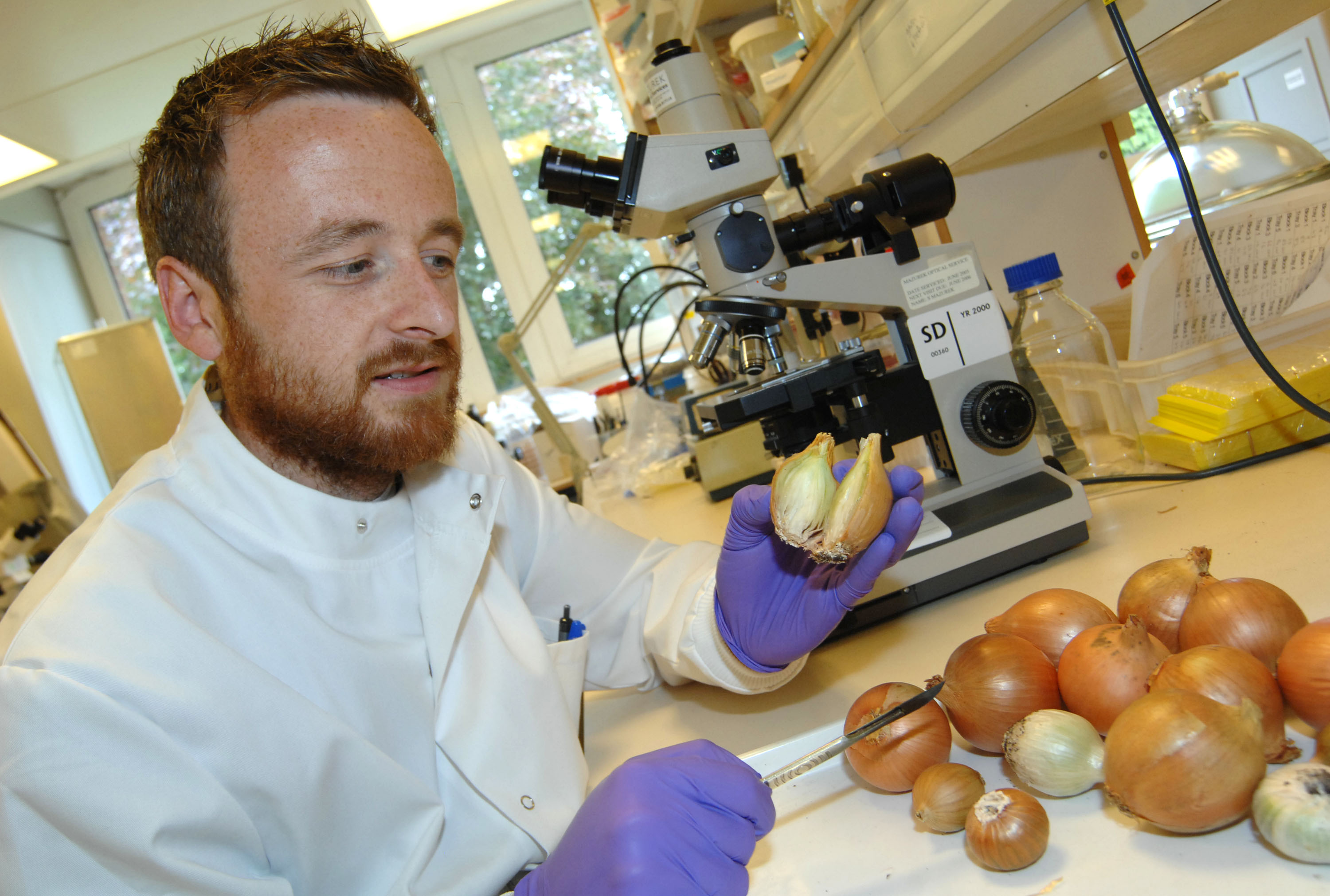 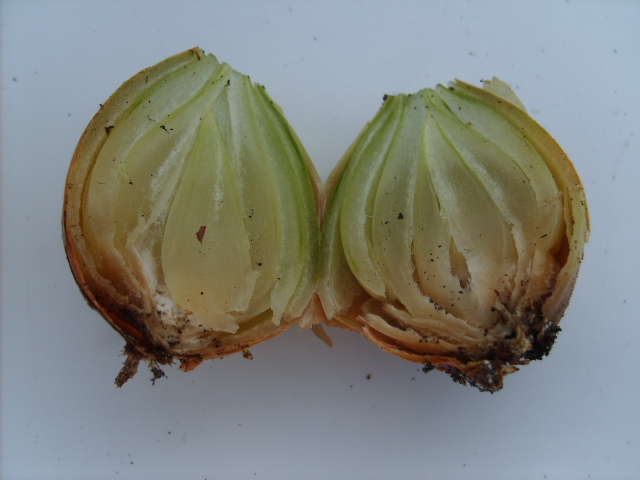  |
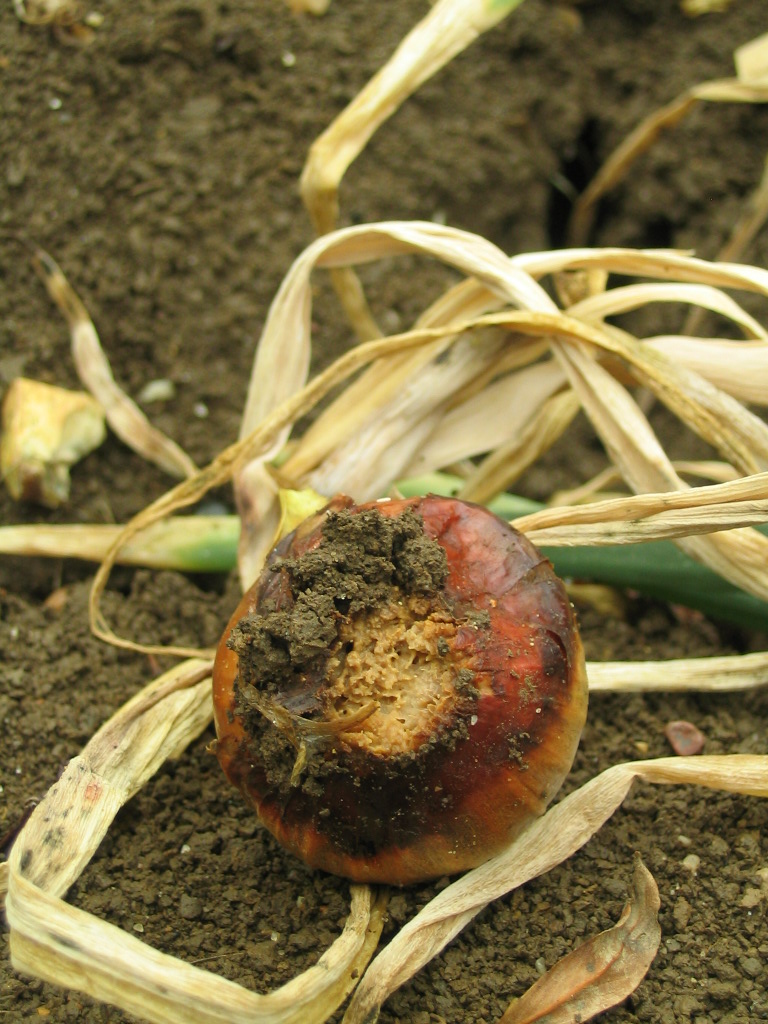
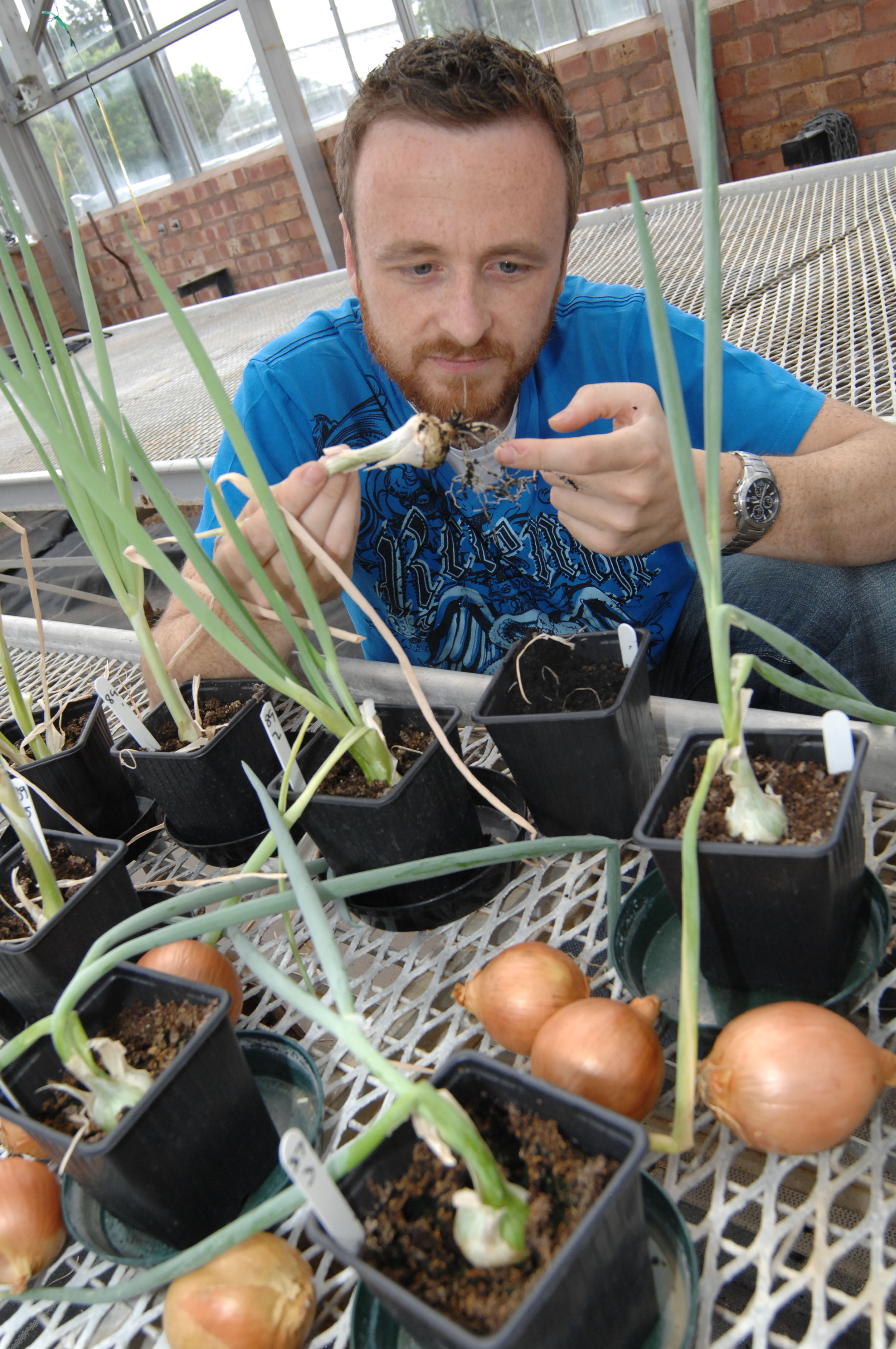
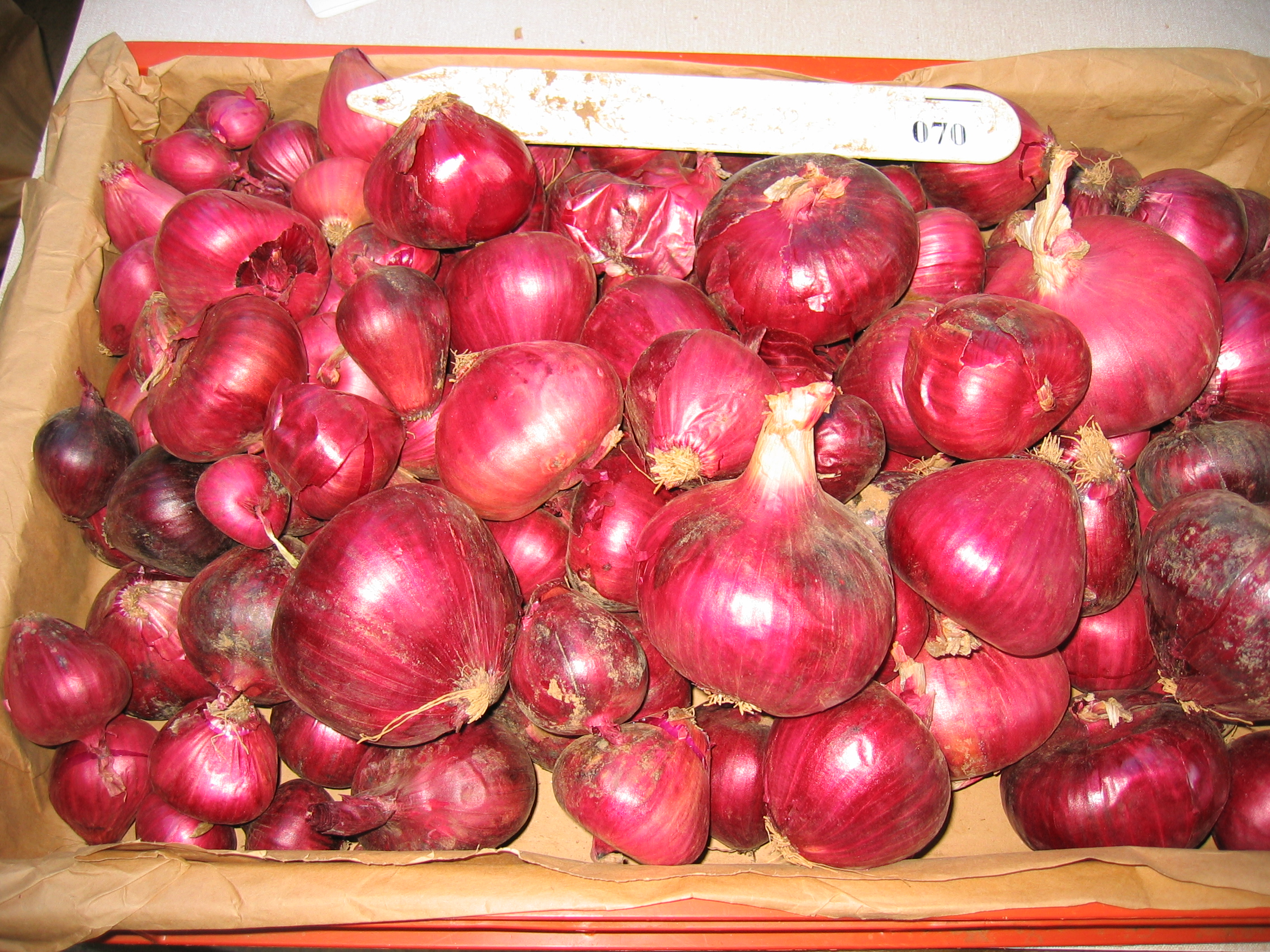
Research led by the Warwick Crop Centre in the School of Life Sciences at the University of Warwick has developed a unique collection of information about the disease resistance of 96 of the world’s onion varieties. It will be a crucial resource for commercial growers and seed producers trying to combat one of the most difficult diseases affecting onion crops. This work may also have key-benefits of reduced fertiliser consumption and enhanced drought tolerance. The work on onions, in this research funded by Defra (The Department for Environment, Food and Rural Affairs), is being carried out by Dr Andrew Taylor a Research Fellow in the University of Warwick’s School of Life Sciences, who has tested and recorded key traits of 96 varieties of onion from Europe, Australia, New Zealand, Africa , India, the US and Japan. The data provides information that will be crucial to growers seeking to create onion varieties that can resist Fusarium oxysporum (which causes basal rot in onions), and which also respond well to Arbuscular Mycorrhizal Fungi - beneficial fungi. An improved interaction with these fungi assists nutrient uptake in onions potentially decreasing the amount of fertiliser required. These fungi can have other beneficial effects such as increased disease resistance and drought tolerance. This research will not only help individual commercial growers and seed producers but will also contribute significantly to global food security, particularly in situations where rising temperatures are an issue. Enhanced resistance to Fusarium oxysporum will be of importance in dealing with rising temperatures as basal rot is more active and acute in warmer conditions. Dr Andrew Taylor will present his work at the Onion Global 2011 conference in Deidesheim Germany which runs from 16th-18th August. The work forms part of a larger Defra funded study at the University of Warwick entitled the “Vegetable Genetic Improvement Network (VeGIN)” looking at understanding and cataloguing useful traits in a range of vegetables that seed producers can use to inform their breeding strategies. Dr Andrew Taylor from Warwick Crop Centre said: “We have developed a unique onion diversity set from material sourced from across the globe. We now have a extremely useful library of the variation in traits including resistance to Fusarium oxysporum (the cause of ), response to Arbuscular Mycorrhizal Fungi (beneficial fungi which help nutrient uptake) and seed/seedling vigour, all of which will be extremely useful to growers and seed producers dealing with changing conditions and threats to onion crops.” Warwick Crop Centre Director Dr Rosemary Collier said: “I am delighted that VeGIN is already providing results that can have a direct impact on the global efforts to enhance food security. This is just the first of what will be a range of outputs from this Defra funded work at the Warwick Crop Centre that will be of significant benefit to growers across the planet.” |
For further information please contact:
Peter Dunn, Head of Communications
Communications Office, University House,
University of Warwick, Coventry, CV4 8UW, United Kingdom
email: p.j.dunn@warwick.ac.uk
Tel: +44 (0)24 76 523708 Mobile/Cell: +44 (0)7767 655860
p.j.dunn@warwick.ac.uk
Dr Andrew Taylor, Research Fellow
School of Life Sciences
University of Warwick
Tel: +44 (0)2476 575030
Andrew.Taylor@warwick.ac.uk
Further pictures click on any to be taken to high res versions
 |
 |
 |
 |
Further information on the funders Defra can be found at: http://www.defra.gov.uk/corporate/
PR106 PJD 3rd August 2011