
19th Century ‘Protestant work ethic’ at heart of Europe’s North/South debt crisis split
 Research from the Centre for Competitive Advantage in the Global Economy (CAGE) at the University of Warwick suggests the 19th Century ‘protestant work ethic’ could have given the economies of northern Europe a head start on their southern neighbours, and is still shaping popular northern European feeling that rankles against bailing out struggling southerners.
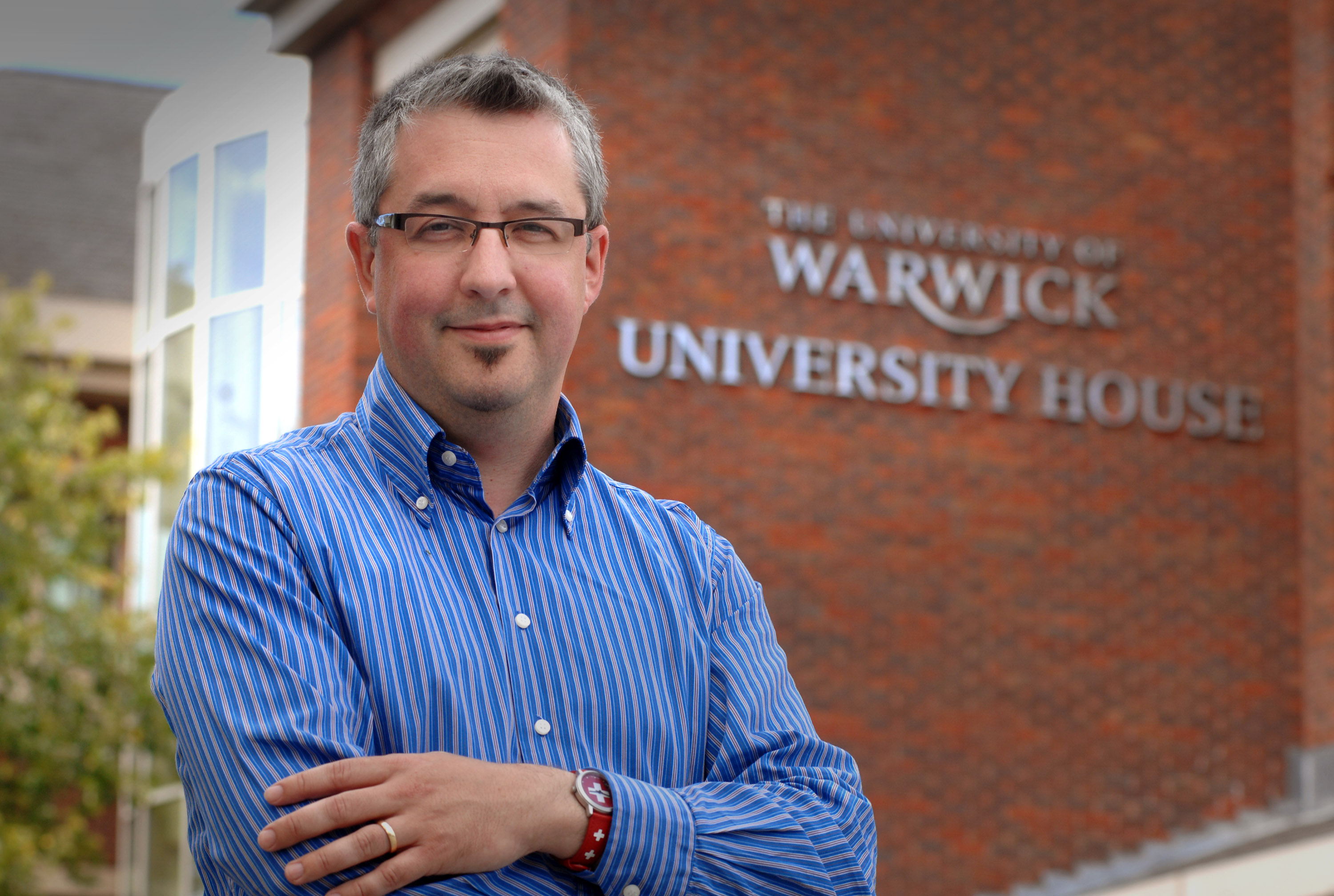
Dr Sascha Becker, Deputy Director of CAGE at the University of Warwick, collated data to discover if Max Weber’s Protestant Work Ethic theory, that Protestantism encouraged hard work as a duty of faith, really did help explain how Protestant areas developed compared to Catholic areas.
Dr Becker used data from 19th Century Prussia and looked at 450 counties. He found that educational attainment was higher in Protestant areas and there were more people working in services and manufacturing, rather than agriculture. He also found a larger income gap between those in Protestant areas and those in Catholic areas.
He said: “We looked at Prussia in the 19th Century because this was the society that Max Weber was born into. Religiosity was also more pervasive at this time. It seems religion was the main driver behind education differences, Protestants were more encouraged to go to school and read the bible, and this higher level of education translated into higher incomes than their Catholic neighbours.”
In Protestant areas in the 16th Century Reformers pushed to make sure there were church schools operating in all parishes. Dr Becker said this gave Protestants an educational advantage over Catholics and it took more than 100 years for Catholics to catch up.
Dr Becker said: “It was only centuries later when compulsory schooling was introduced that the Catholics began to catch up with the Protestants. Even today, looking at data from 2000 in Germany we found that Protestants had higher level or more education than Catholics. They also had a higher probability of going to University and finishing their course.”
The research found that women in Protestant areas tended to be more liberated because girls were educated along with the boys.
Dr Becker said: “Again it is this educational advantage that Protestant girls were sent to school with the boys in the early years of the Reformation. It seems Protestantism was an early driver of emancipation. The order seems to be Protestant men, Protestant women, Catholic men and then far, far below are Catholic women. It is surprising that even today we find that in Scandinavia the majority of women go out to work, but in Italy it is more traditional and a larger number stay home to look after the children.”
He added that his findings were particularly interesting in light of the recent European Sovereign debt crisis.
He said: “It is noticeable that the Northern European countries seem to be doing well to keep their finances in check whereas in Southern European countries such as Spain and Italy, everything is running out of order. I would not say you can attribute this to religion per se, but it certainly had a bearing on the way their respective economies have developed. There is a North/South divide and a popular feeling in Northern Europe that they should not have to bail out their debt-ridden Southern neighbours.”
Listen to Dr Becker talking about his research in this podcast:
Notes to editors
Dr Becker’s research papers on this issue are:
Was Weber Wrong? A Human Capital Theory of Protestant Economic History
(with Ludger Woessmann), The Quarterly Journal of Economics (QJE), 2009, vol. 124(2), 531-596.
http://dx.doi.org/10.1162/qjec.2009.124.2.531
Luther and the Girls: Religious Denomination and the Female Education Gap in 19th Century Prussia
(with Ludger Woessmann), Scandinavian Journal of Economics (SJE), 2008, vol. 110(4), 777-805.
http://dx.doi.org/10.1111/j.1467-9442.2008.00561.x
To contact Dr Becker e-mail s.o.becker@warwick.ac.uk or call 024 765 24247 or alternatively contact Kelly Parkes-Harrison, Press and Communications Manager, University of Warwick, k.e.parkes@warwick.ac.uk, 02476 150868, 07824 540863.