
Research
White dwarfs and the local stellar neighbourhoodWe study white dwarfs and local stars from the newly defined Gaia sample, including close binary stars containing compact objects. We are particularly interested in the exotic physical processes that drive their evolution, both from observational and theoretical point of views. We also study evolved planetary systems including planets, rocky debris and discs around white dwarfs. We are partners in the four large spectroscopic surveys (DESI, SDSS-V, WEAVE, and 4MOST). We also specialise in the high-speed data acquisition and analysis techniques needed to track them. Members of the group have led the development and exploitation of the ULTRACAM and HiPERCAM high-speed, multi-colour photometers. |
 |
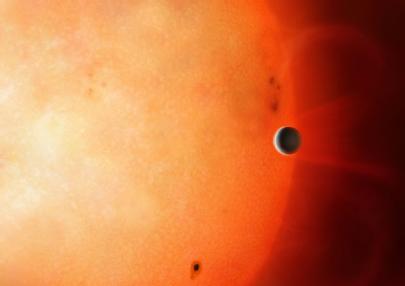
ExoplanetsLink opens in a new windowWe are one of the largest exoplanet research groups in the UK. We cover many aspects of modern exoplanet research including exoplanet discovery, characterisation, atmospheric composition, migration, and habitability. We study exoplanet from formation in proto-planetary disks right through to exoplanets around white dwarfs. We run the NGTS facility at Paranal Observatory in Chile. We also host the PLATO Science Management Office, which coordinates the activities of the scientific aspects of PLATO - ESA’s upcoming space-based exoplanet discovery mission. |
 |
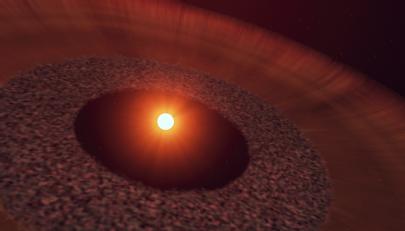
Circumstellar discsWe study the disks that orbit other stars like our Sun using theory and observation. Some of these disks are in the process of forming planets, and others are similar to the Solar System’s Asteroid and Kuiper belts. These disks reveal information about the origins of other planetary systems, and help place the Solar System in context. |
 |
Stellar populations across cosmic timeGalaxies evolve over cosmic time as both their stellar populations and their environments change. Their stars age while new stars are born with ever increasing metal enrichments. Understanding this process involves understanding the galaxies with host star formation across a broad range of redshifts - from very local out to the further reaches of the observable Universe. These galaxies often show complex morphology or evidence for interactions. We work on both observations and modelling of stellar populations in galaxies across cosmic time. |
 |
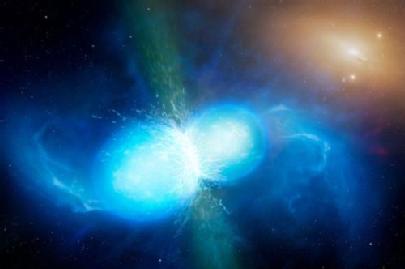
Explosive Transients and Multi-messenger astronomyThe transients group at Warwick studies all manner of explosive, extra-galactic transients as probes physics at the extremes of matter. Our interests lie primarily in supernovae, fast blue-optical transients (FBOTs), and the electromagnetic counterparts to gravitational wave sources. We study their multi-wavelength signatures, to probe the explosion mechanisms, and their host galaxies and local stellar populations to characterise the progenitor systems. At Warwick, we are leading the development of the Gravitational wave Optical Transient ObserverLink opens in a new window facility. GOTO is a dual-site observatory aimed at enabling multi-messenger astronomy, and bringing together an international collaboration of scientists to study many aspects of time-domain astrophysics. |
 |
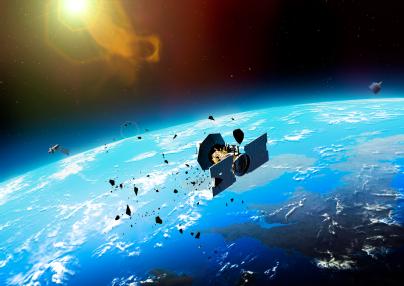
Space domain awarenessWe tackle issues relating to the safety and sustainability of satellite operations in the space domain, including the timely acquisition of precise datasets to detect, track and/or characterise objects in orbit, the fusion of physical and human-based information for improved object tracking and the modelling and prediction of space weather, and the quantification of associated risk. |
 |