
Elementary Particle Physics Group
Welcome to the Warwick Elementary Particle Physics GroupWe are carrying out research into the fundamental particles of matter and the forces by which they interact. Further information about the research and activities of the group can be found below. |
 |
Research Activities
ATLAS |
|
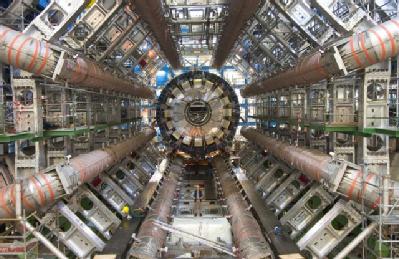 |
ATLAS is a multipurpose experiment at the LHC, built to study the collisions of protons. At Warwick we are interested in Higgs Physics (particularly with Higgs decaying to tau leptons) and in the operation of the trigger, a device which sifts through 40 million collisions per second. |
Detector Development |
|
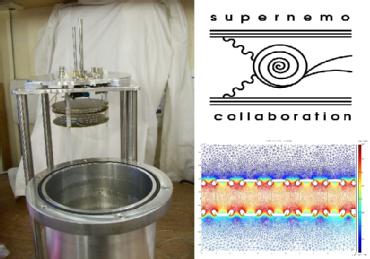 |
Our detector research and development targets innovative technology for neutrino experiments. This covers various diverse topics, from recent efforts into accelerator-based neutrino physics and neutrino astrophysics applications to specific neutrino mass searches using double beta decay. |
LHCb |
|
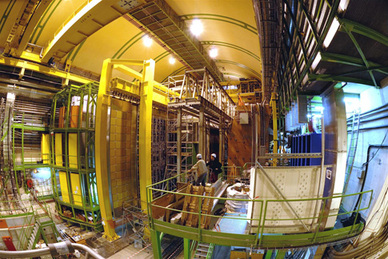 |
B physics is the study of the 'b' or 'beauty' quark. This heavy quark has fascinating properties, such as the phenomenon of 'flavour oscillations' by which it can change into its own anti-quark. Studying these enables us to distinguish between matter and anti-matter via the related phenomenon of CP violation. Further studies could allow us to detect the presence of new forces beyond the Standard Model of particle physics. |
Neutrino Experiments |
|
|
|
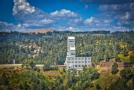
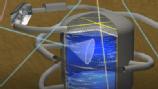
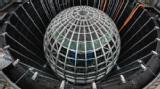
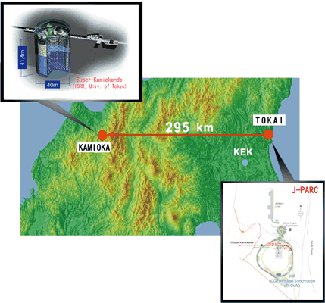
We are engaged in a number of neutrino experiments to measure CP violation, neutrino mass ordering, supernova relic neutrinos, Solar neutrinos, neutrino neutron interactions and many novel technology advancements. These include accelerator-based experiments (DUNELink opens in a new window, HyperKLink opens in a new window, T2KLink opens in a new window, ANNIELink opens in a new window, IWCD Link opens in a new window and WCTELink opens in a new window), reactor-neutrino experiments (JUNO)Link opens in a new window and low energy experiments (Super-KLink opens in a new window, EGADSLink opens in a new window and BUTTONLink opens in a new window). |
Information is also available on our past involvement in the BaBar experiment and other activities related to b physics.
PhD Applications
We are offering PhD studentships for commencement in October 2024. These studentships will cover tuition fees and living expenses for UK candidates. Some studentships may also be available to students of any nationality. Prospective students are invited to contact us.